Machu Picchu
Friday – Saturday, 1-2 May
The plan was for us to leave Ollantaytambo by train, alighting at Kilometer 106, and follow the Inca Trail to reach the Sun Gate, with its extraordinary panoramic views of Machu Picchu.

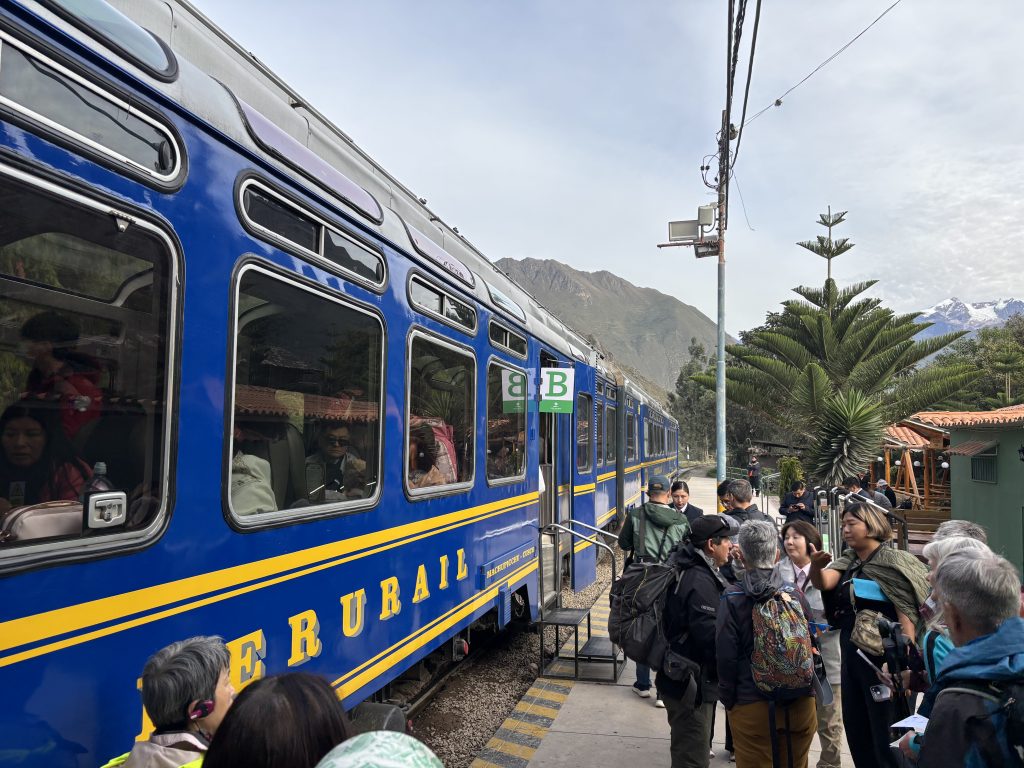
It would be a long hike, under a certain amount of time pressure and quite vertiginous. Peter was strongly advised against doing this part, and remain on the train to Aguas Calientes, where our next hotel was. He was more than happy for some down time on his own there. Lynne and Vivien were both keen to make it to the Sun Gate.
This was not to be, as it became apparent overnight that Lynne needed medical attention, which was arranged with the medical centre in Aguas Calientes. We were fortunate to get a hotel room immediately, on arrival. Wilson arranged for a doctor to visit at our hotel room, who arrived with the medical clinic manager.
After a series of questions, the doctor arranged for a nurse to join in, and Lynne was put on an intravenous drip for the afternoon. She was given tablets to take over the next five days and a strict diet to follow: No fruit, no vegetables, no dairy, no caffeine, no alcohol and plenty of electrolyte solution. She had contracted acute gastroenteritis the day before commencing the Lares trek.
Peter spent the day either conversing with the doctor or nurse with the aid of Google Translate, or rushing around to find an open pharmacy, as it was Labour Day.
Meanwhile, Vivien said that reaching the Sun Gate was one of the top travel highlights of her life.
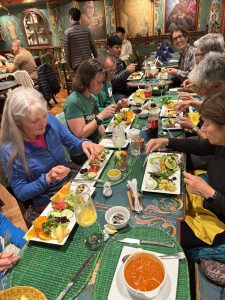
We all went out for dinner to an an excellent restaurant- that is, all but Lynne. Peter brought back a takeaway bag with chicken soup – doctor’s orders!
Machu Picchu at last
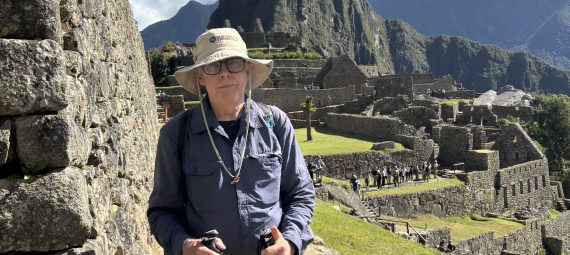
The early morning queue to catch the shuttle buses to Machu Picchu moved quickly, before a hair-raising drive up the windy road to the site, arriving just before 8am. We were guided round Circuit 3 by Wilson and Zac. The first sighting of the extensive buildings is awe-inspiring.

Restored houses
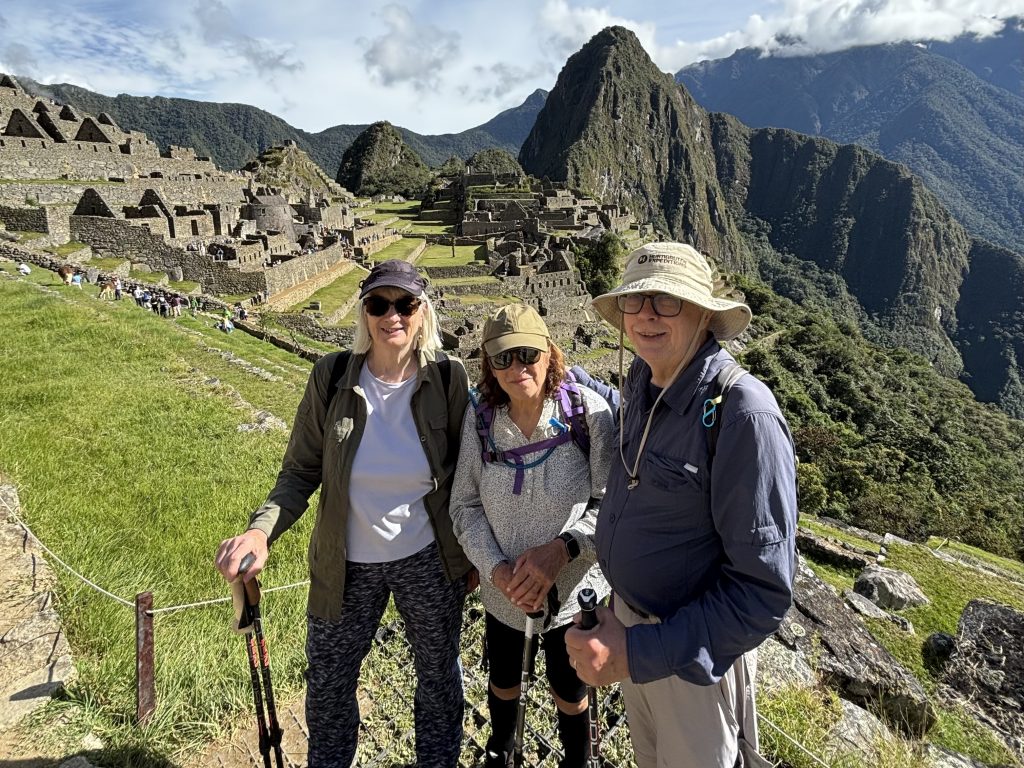
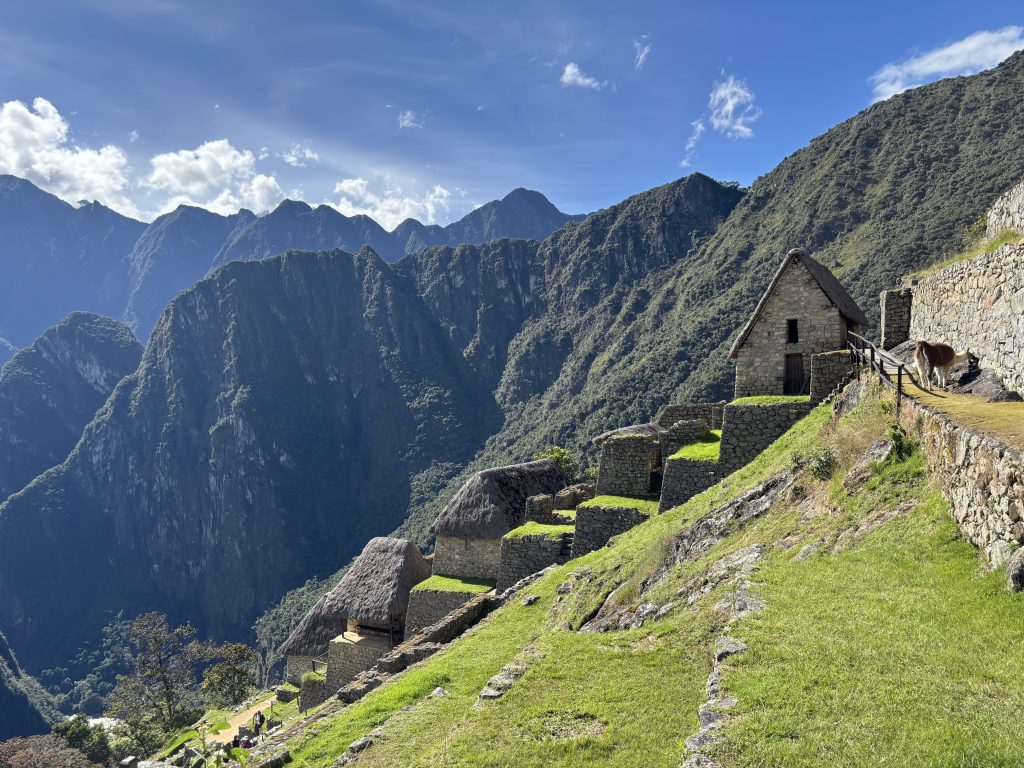

The city was “discovered” by Hiram Bingham of Yale University in 1911 (although it was some local farmers who brought him to the overgrown site) and it was all the more impressive as it hadn’t been subject to 400 years of looting like other Inca sites.
What powerful authority Inca ruler Pachacutec had, to order his people in the mid-fifteenth century to build a city in such an inhospitable place! It lies perched high above the Urubamba Gorge requiring colossal foundations on terraces, which hold the buildings and provided terrain for the growing of food, which have withstood earthquakes over the centuries.
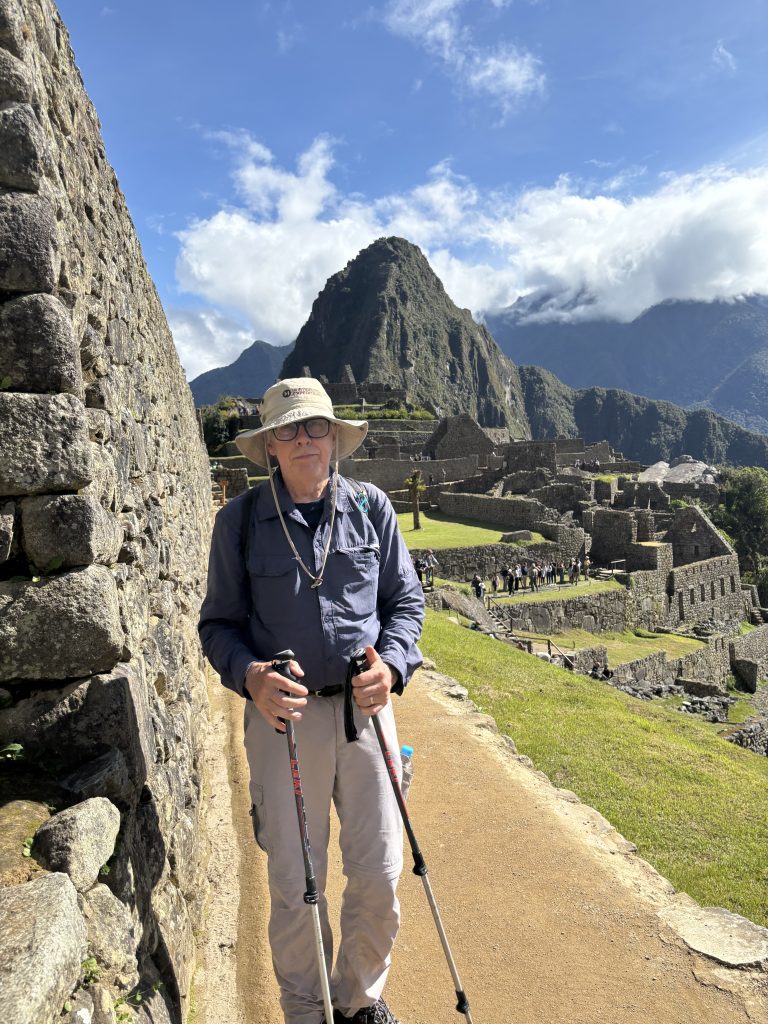
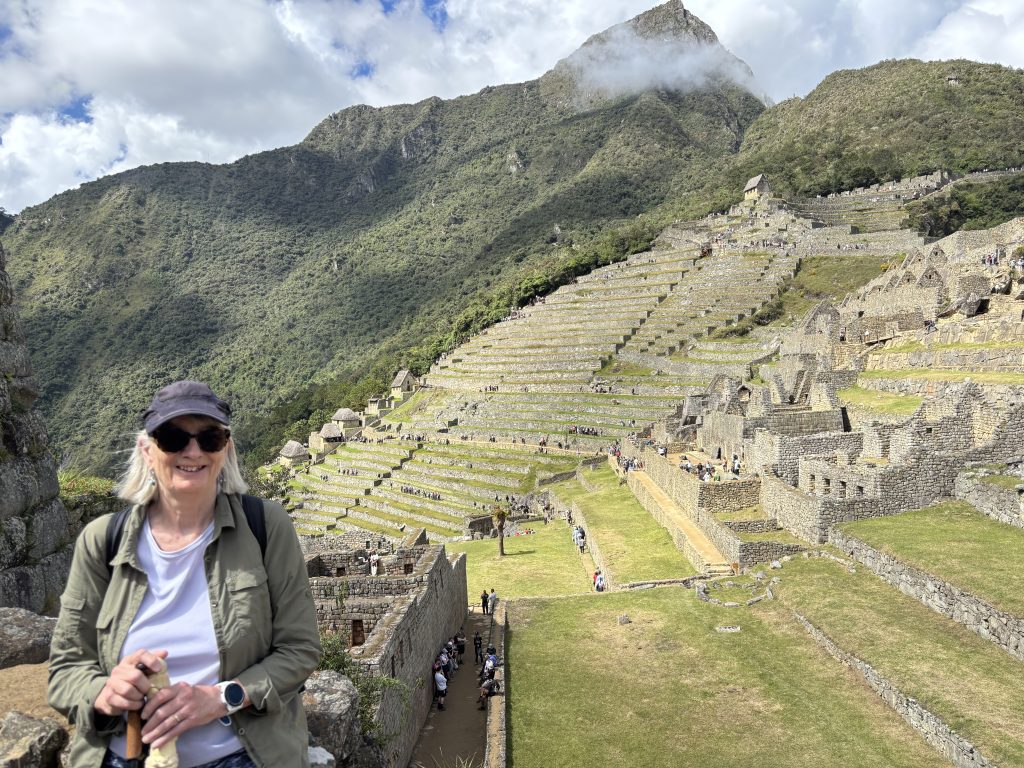
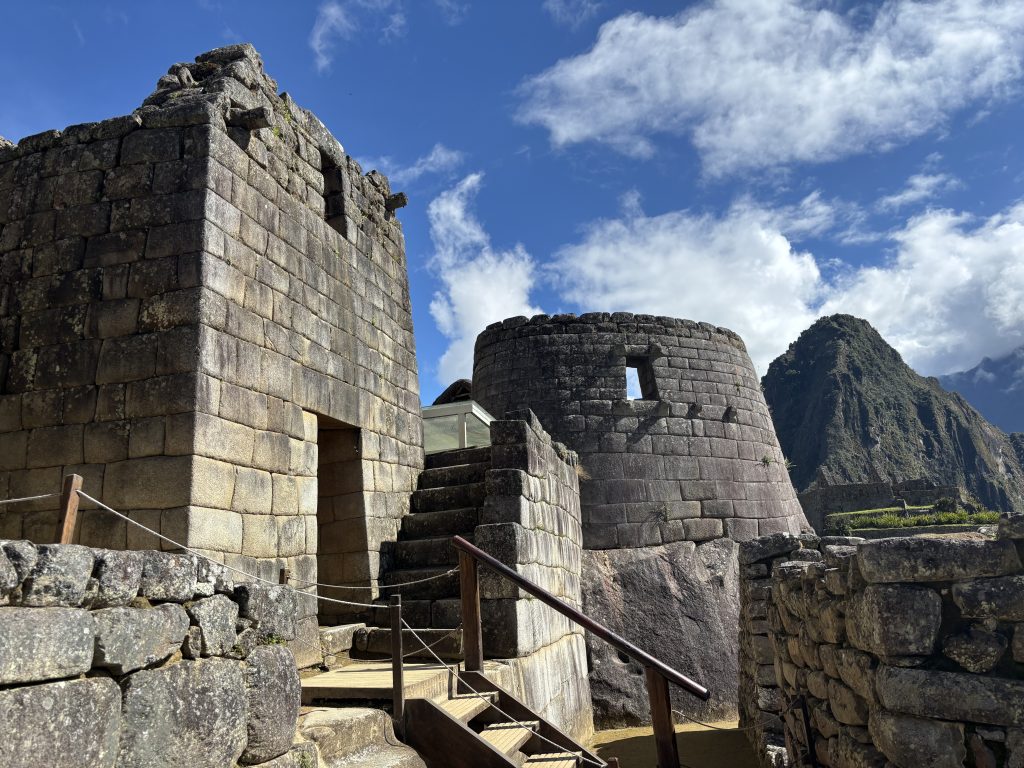
Equally important is the advanced and extensive drainage system, ensuring the structures don’t get washed away.
Machu Picchu is situated in an auspicious spot with an observatory to allow the celestial worship, that was so important to the Incas. We saw the round Temple of the Sun, above the burial remains of VIPs and the Imperial residence.
For most of our 3-hour visit, the sun was beating down on us, affording little shade, with narrow paths and steep steps.
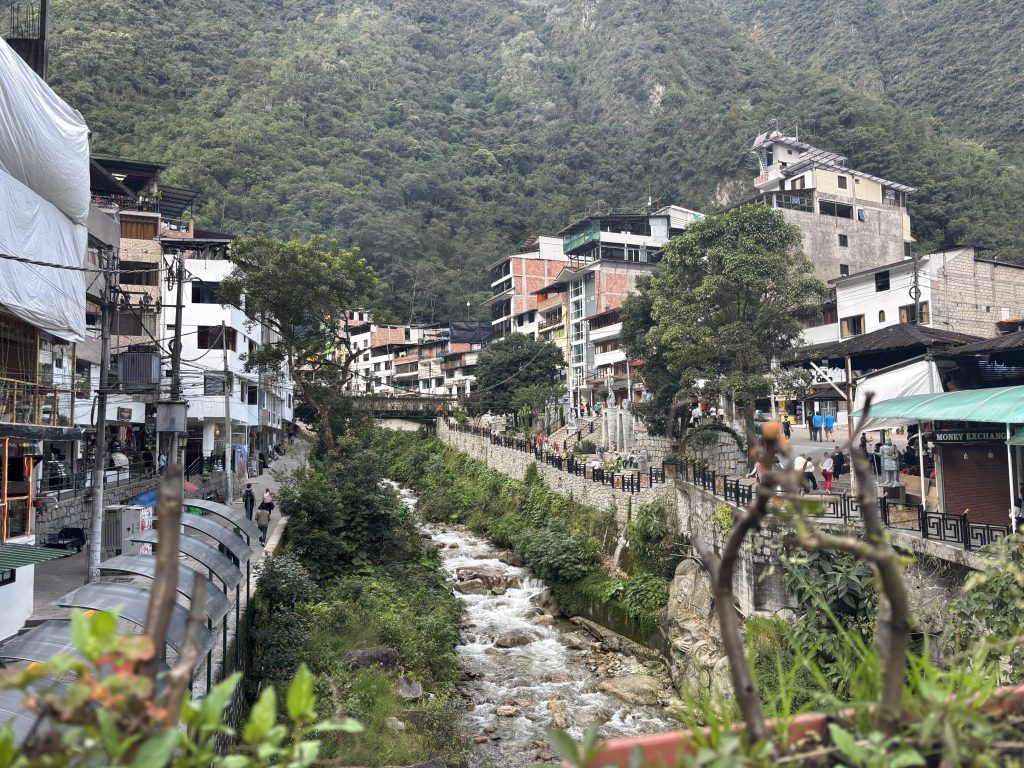
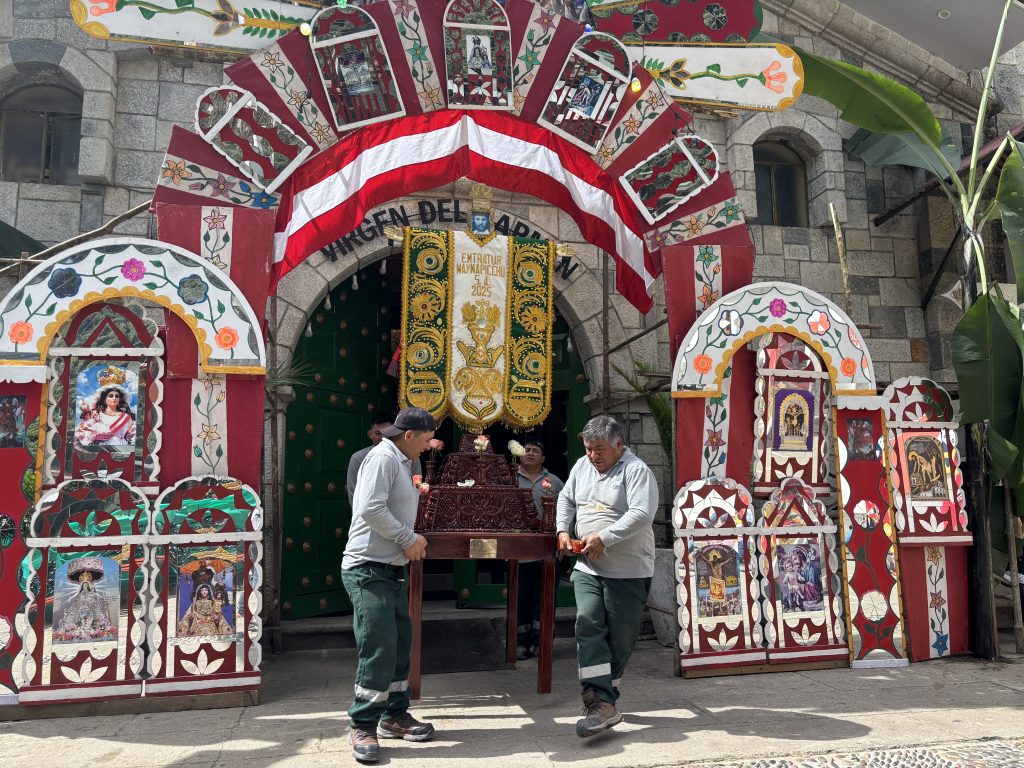
Our train back to Ollantaytambo wasn’t until mid-afternoon, so we dozed in the sun after a walk round Aguas Calientes. The town nestles either side of a creek running down the centre of the Main Street, with the railway line cutting across at 90 degrees. We managed to see the church, decorated with fresh white flowers for a festival later in the day.
Aguas Calientes Church festivities
Complete with our day packs and duffle bags from our overnight stay in Aguas Calientes, we picked up our two duffle bags from the Lares trek at Ollantaytambo. We returned by minibus to our hotel in Cusco where our two suitcases awaited us.
Our daunting task was to organise laundry and rearrange our packing so that Peter had a duffle bag for his three day trip to the Amazon. Lynne had another duffle bag for her stay at another hotel in Cusco, with further luggage to leave with our base hotel’s concierge! As you can imagine, packing became quite complicated!
Highly exciting stuff, again! History combined with immediacy. We can only hope that Lynne‘s gastroenteritis subsided quickly!!