The Lares Trail
Tuesday – Thursday, 28-30 April
Day 1
It was with some trepidation that we left our comfortable hotel to follow the Lares trail for three days, sleeping in tents, climbing to a remote pass of over 4,700m, losing contact with the outside world. We hoped the training we had done back home was sufficient.
Lynne had been distinctly unwell since her return from the Sacred Valley the day before. Wilson thought it was caused by over-exertion in the high altitude; she hoped he was right.
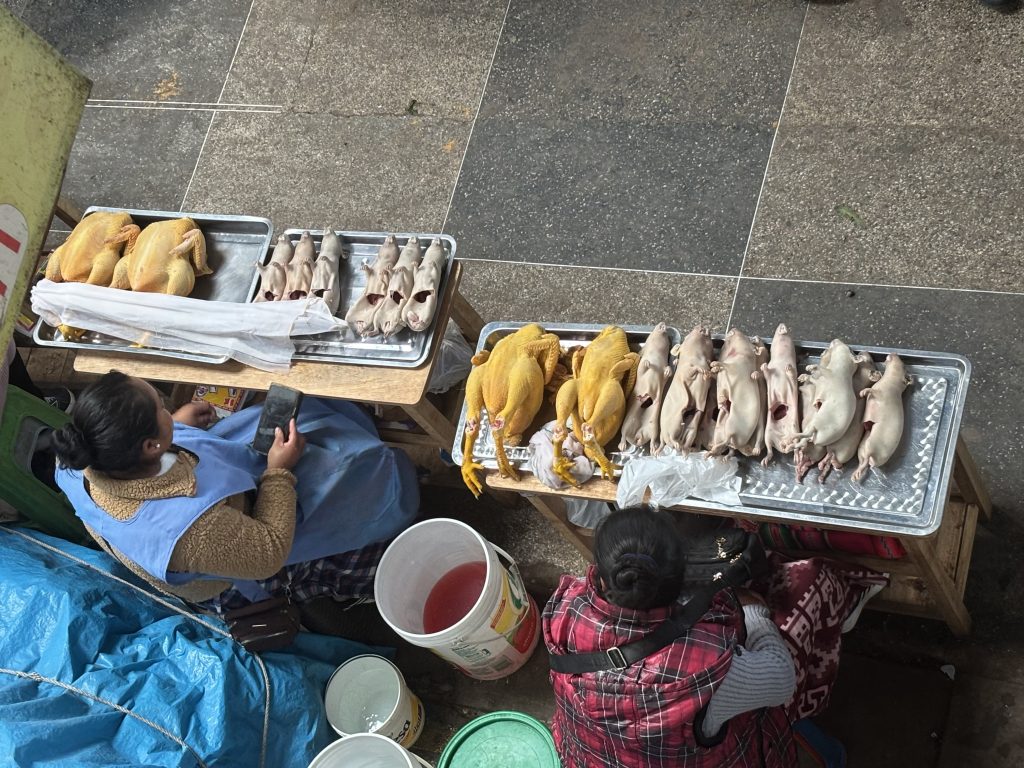
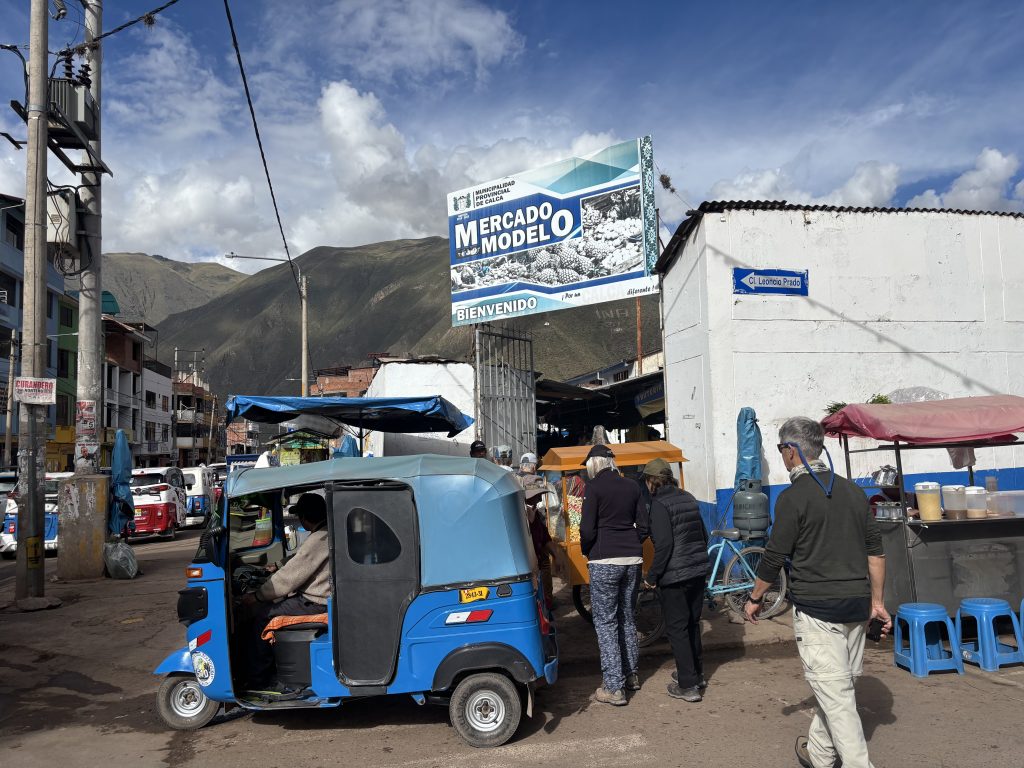
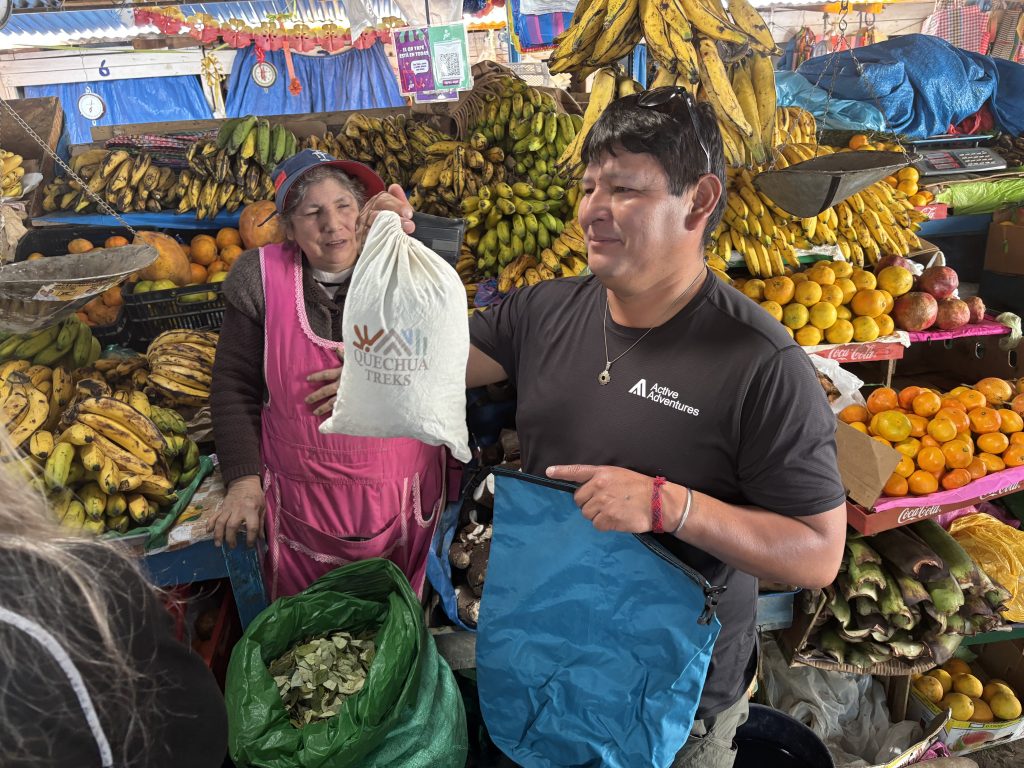
We started early, retracing our route in the minibus, to Pisac and the Sacred Valley. We stopped to explore the large and busy covered market in the town of Calca. It supports 600 traders, with a wide array of fruit, vegetables, spices, flowers, hardware and meat, including Guinea pig (which is reserved for special occasions!).
Then onwards to Lares and the start of the trail. We didn’t avail ourselves of the hot springs available, anxious to start the arduous climb to our lunch spot. Our porters would have constructed our meal tent, their cooking tent and our porta-loo.
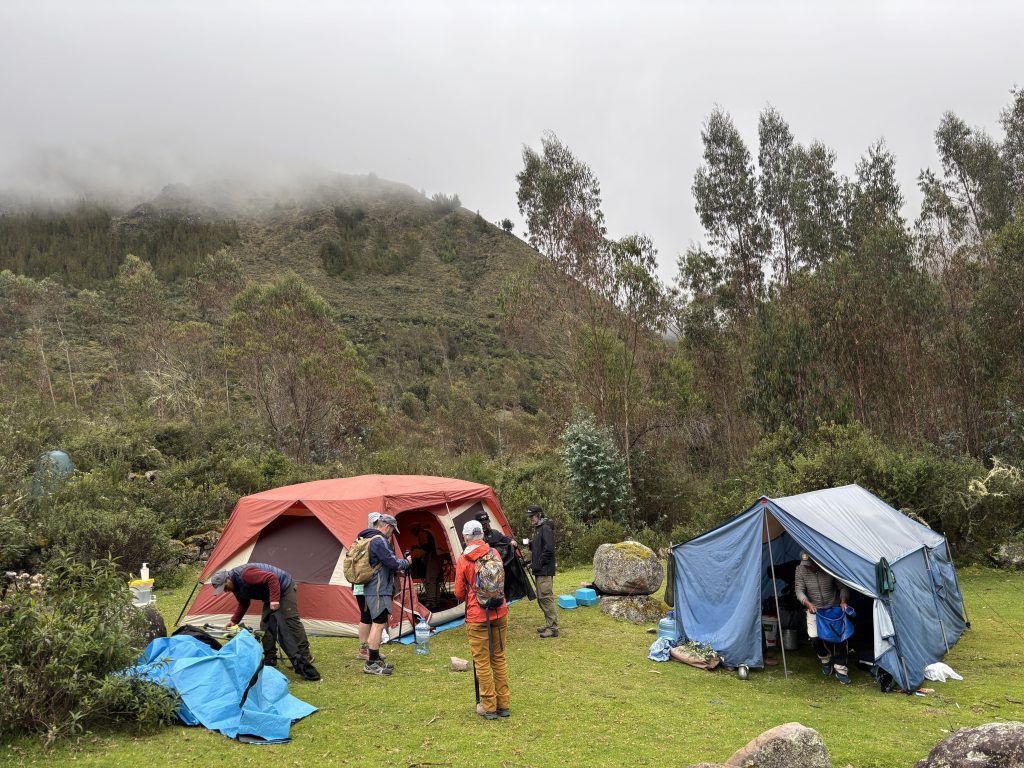
There were nine of us on the trek, plus our two guides, Wilson and Zac, accompanied by a support team of seven, comprising, cooks, porters and muleteers, all local farmers under the age of 50.
Our trekking group consisted of:
Karen and Vic from Asheville, North Carolina, veteran Active Adventures explorers;
Janet and Bill from Philadelphia, Active Adventures novices. (At 53, Janet reduced the average age of the group).
Shirley and Don from Saskatchewan, Canada, both retired PE and maths teachers, who had traveled with Active before.
Completing the numbers were Vivien, Peter and Lynne clearly raising the average age of the group, which was 66 1/2…
The food on the trek was great, if rather excessive, to fuel us up for the trekking. The tents just about had room for two sleeping bags, daypack and smelly boots. We were generously provided with basins of hot water, morning and night, but best of all a hot water bottle which made the sleeping bags snug.
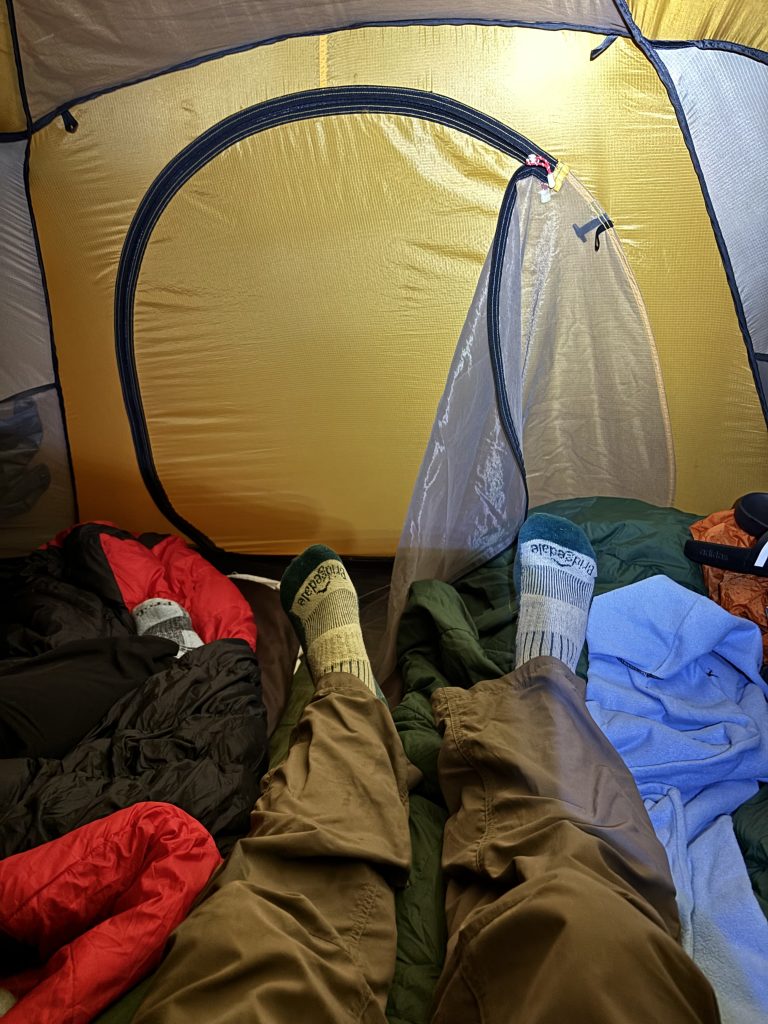
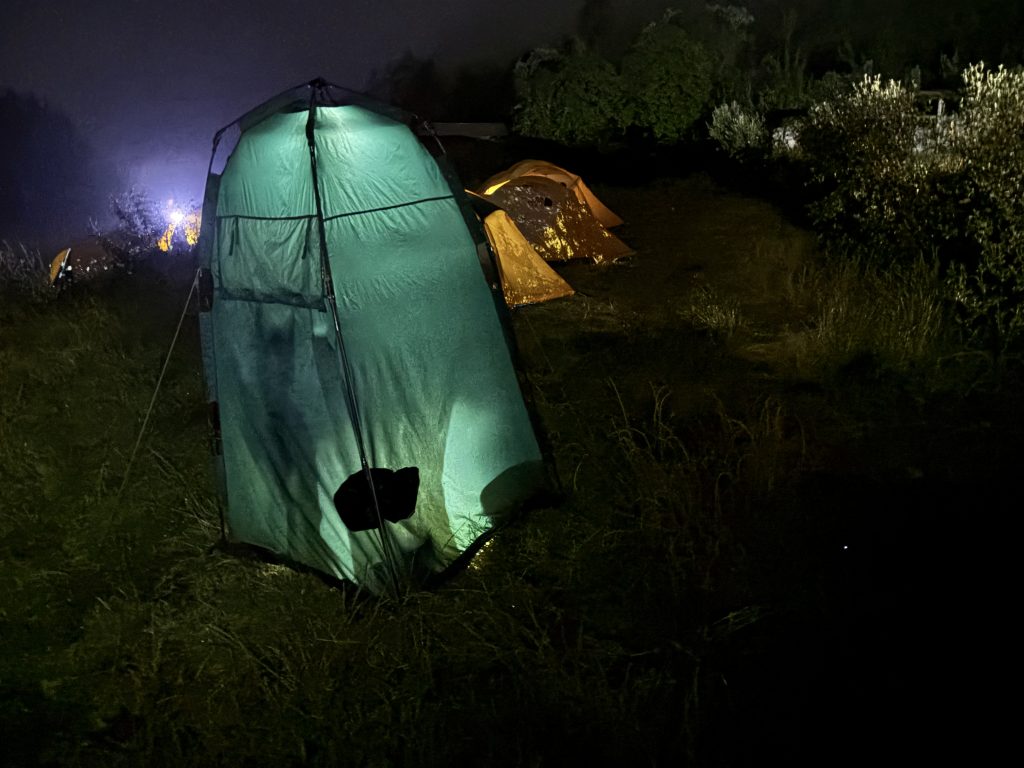

The camp sites were remote, the first at Cuncani at 3,840m and the second, accessible only by mule, at 4,400m. Both were muddy and damp, with the inevitable alpaca “gifts” to avoid. The most troublesome feature was crawling in and out of the tent (especially in the middle of the night) without getting one’s knees wet and muddy.
The trail started off fairly gently, passing some remote habitation and a fair number of fields populated with alpacas, llamas and sheep.
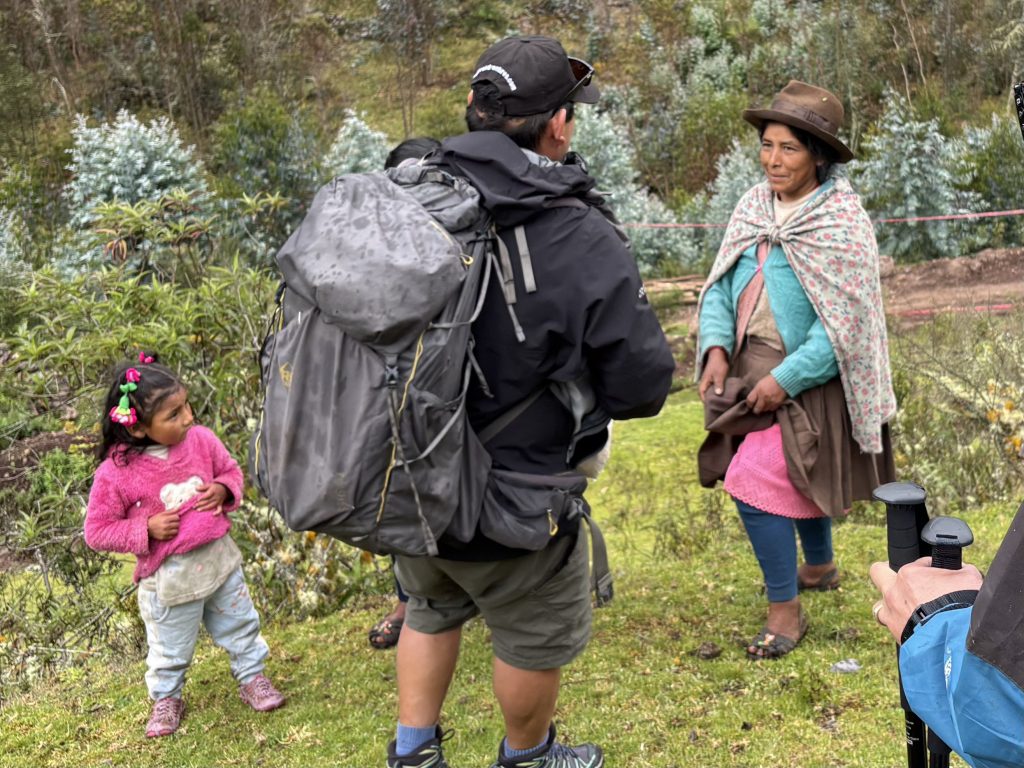
Occasionally we encountered a few inhabitants, where we stopped, chatted and gave presents. Cocoa leaf for the adults and corn bean snacks and little toys for obviously thrilled children, bought previously in the market.
The view ahead looked forbidding, with a craggy, snow covered mountain top. But finally, as darkness fell, we arrived at Camp One in the rain. We were assigned tents as we all scrabbled for torches, as we stumbled in the long, wet grass.
Lynne had already ensconced herself in our tent, having caught a lift from the porter van from our lunch place. She had been in no fit state to continue that afternoon due to being ill.
After unfurling sleeping bags, we assembled in the dining tent for an excellent meal plus a lot of jollity around the table.
After an early night, we were awakened at midnight by a tremendous thunderstorm. This didn’t directly inconvenience us, except later by snow and very wet (and muddy) conditions on the trek.
Day 2
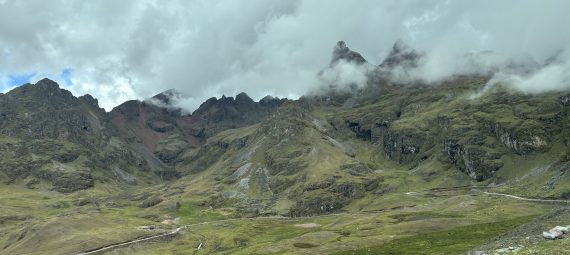
The following morning we woke up to a cloudless sky and marvelled at the dramatic peaks surrounding our camp. Breakfast, stowing sleeping bags and packing day backpacks, brushing teeth all happened smoothly in the wet field.
The second day was a really big day, on account of the ascent and the distance we needed to achieve. It was cold at first in the very early morning, but became very warm when we reached the sunshine. It was a tough climb, Lynne struggling at the rear due to altitude and lack of energy.
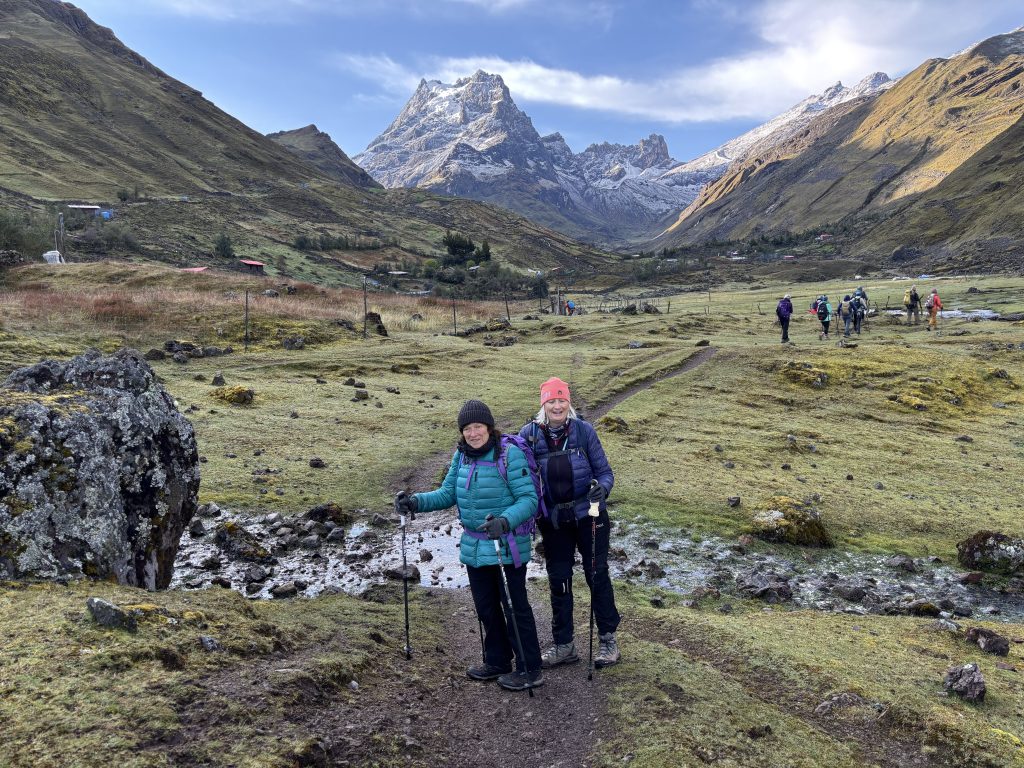
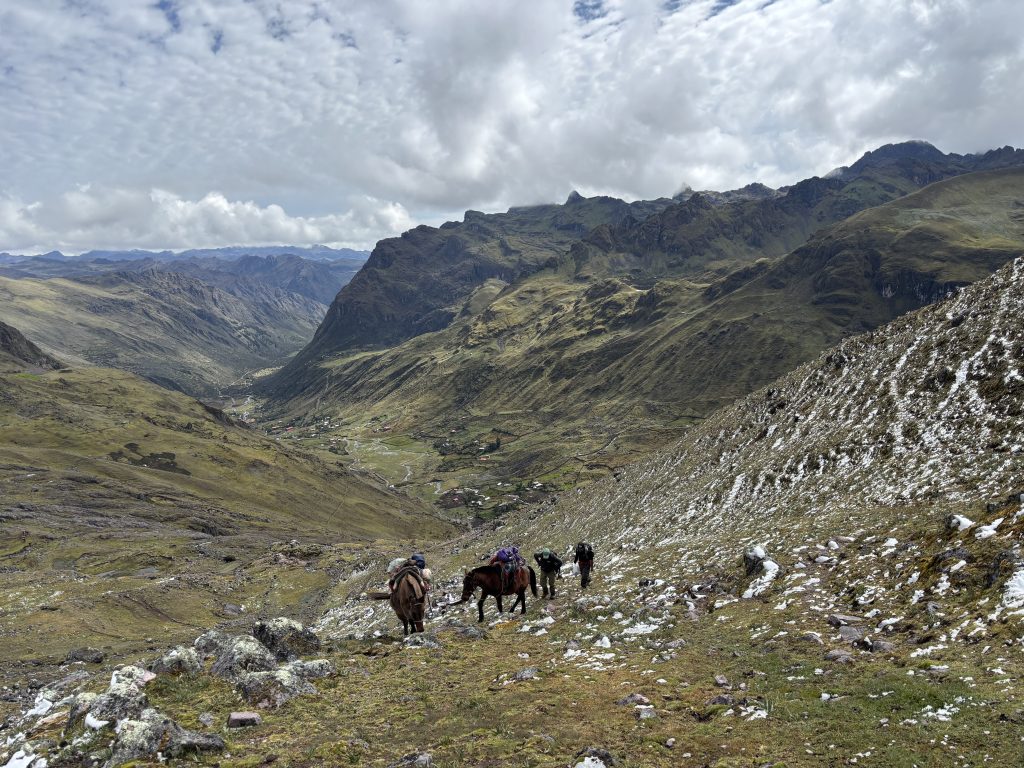
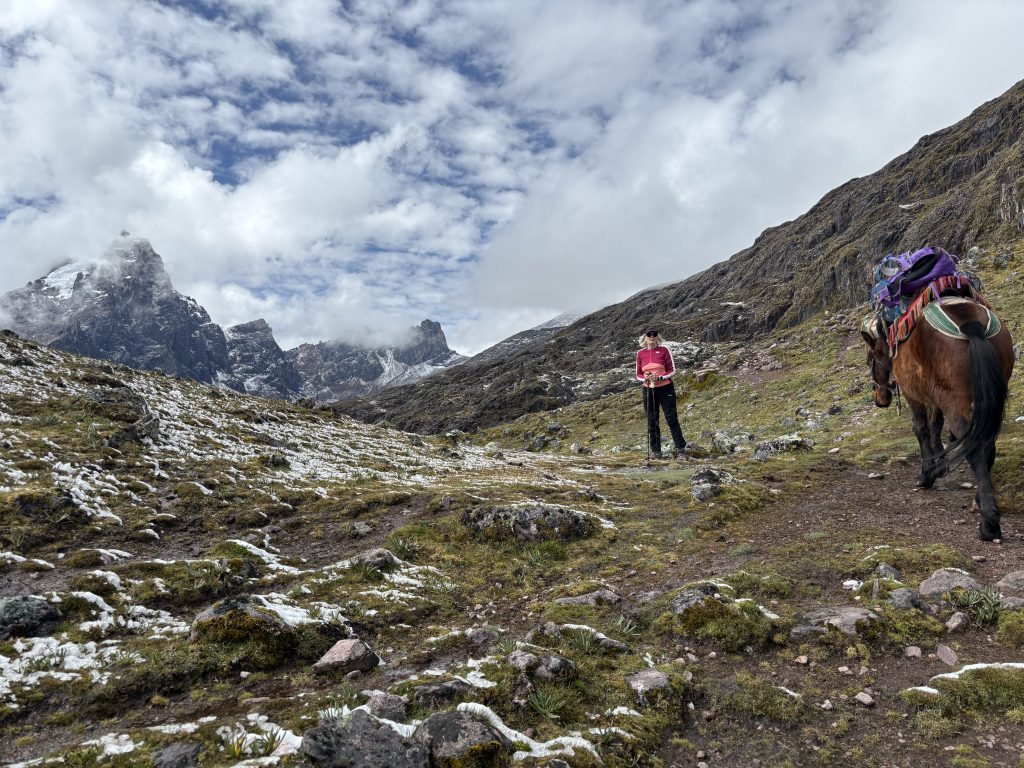
When we reached one summit, another awaited, but the views looking back the way we had come, gave both pleasure and a sense of satisfaction. We were all exhausted when we finally reached the top of the highest, Pachakuteq Pass, which rewarded us with spectacular views way down the sunlit valley. We were, our phone compass told us, at 4,790m! (15,715 feet).
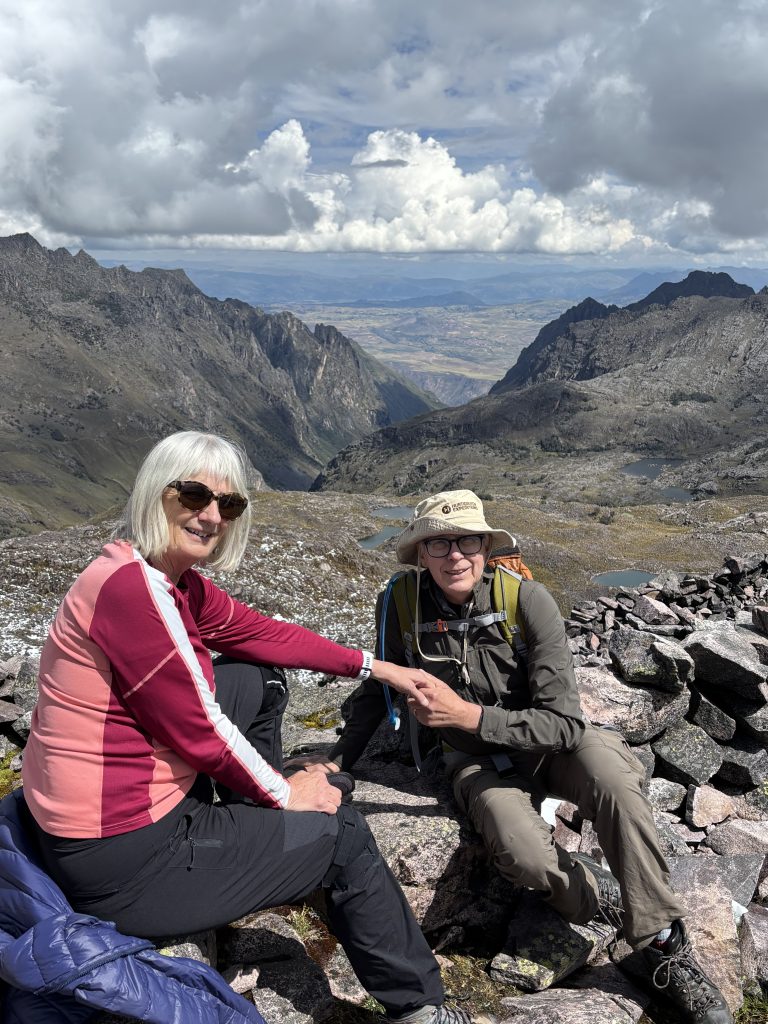

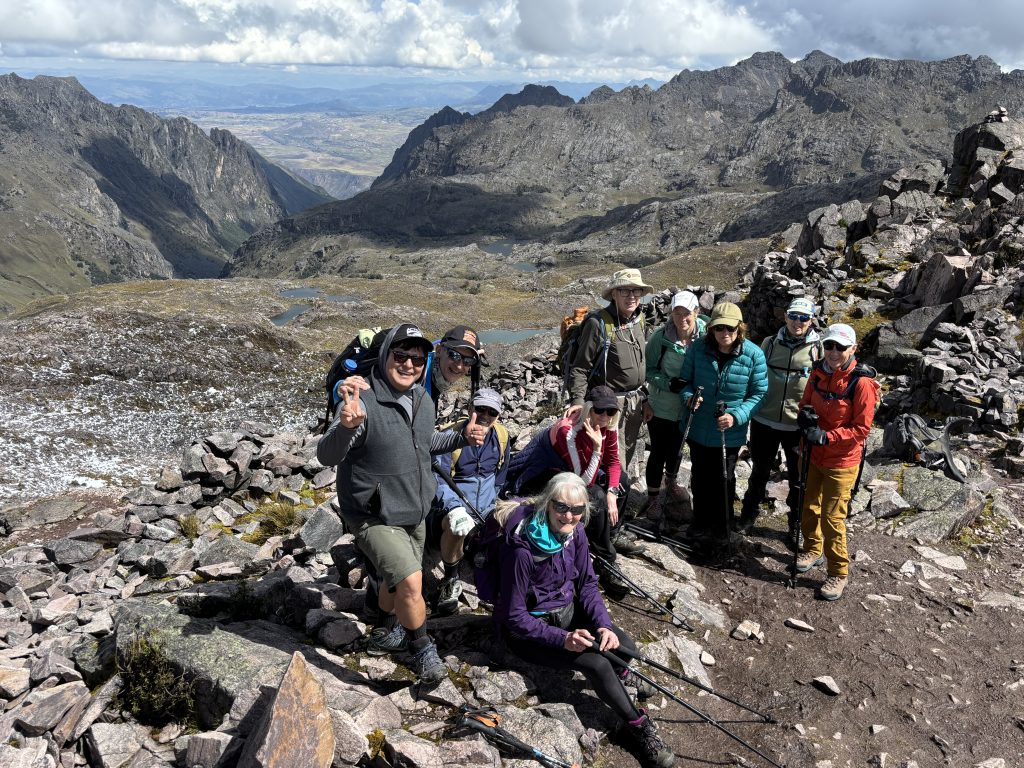
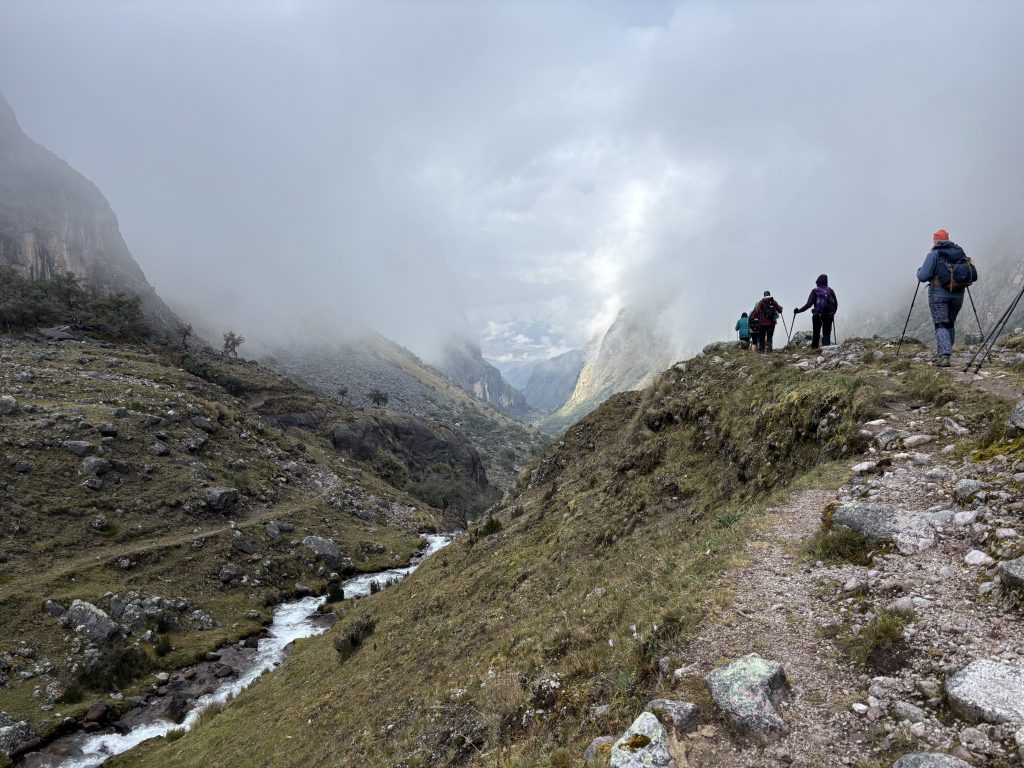
Whilst the uphill was challenging, particularly at such high altitude, the downhill was just as hard, with large rocks, rolling stones, running water, mud, bogs and forests to traverse with the fantastical crooked polylepis trees. Our guides were marvellous in helping us navigate the tricky parts of the trail.

Our camp for the second night was pitched at , not a step too soon!
Day 3
This morning we awoke to clouds which cleared as the sun came up. Our last day was a long, long trek downhill, through forests, following the river, passing some farms en-route. We enjoyed some spectacular waterfalls as the river flowed down the mountain.
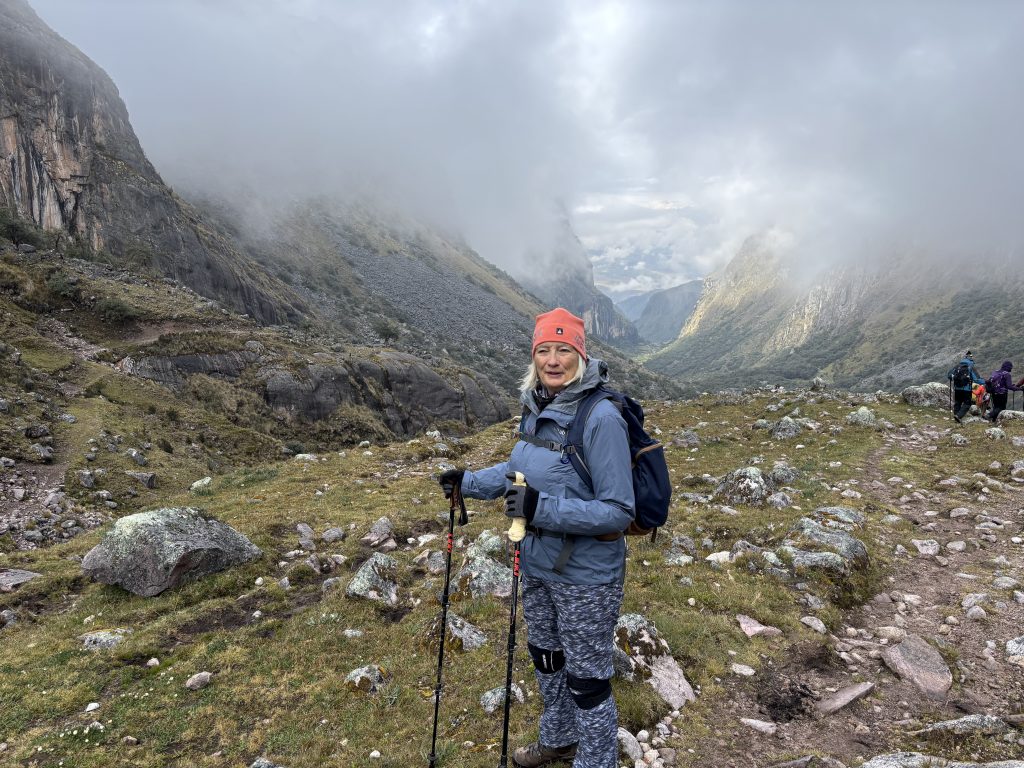
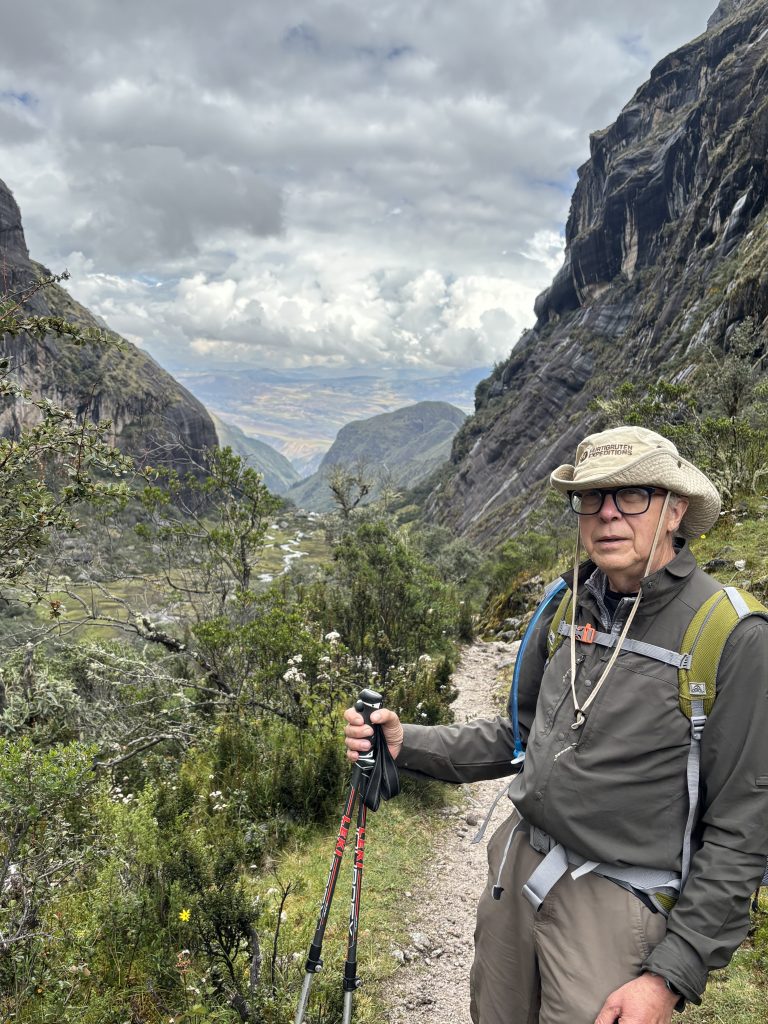
We had the pleasure of following an old Inca trail part of the way. The flowers were stunning. The weather got warmer until we finally reached the end of the trail, where our fantastic cooks had prepared a well deserved lunch. Well fed and relieved, we picked up the minibus for the drive to our next adventure at Ollantaytmboo.

We all felt we had given 120% effort to completing the trek. Lynne struggled with lack of energy, caused by her stomach problems, slow and out of breath on the long ascent, but in her element on the way down. Lynne had acquired some mud layers through being a bit too cavalier on some of the more tricky stretches.
Vivien was impressive on the climb, but valued Wilson’s support on some of the tough descent.
Peter was, as usual, a rock, but even he was exhausted, finding the last kilometre hard work on his tired knees and with his vertigo, made it with Zac’s support (literally).
But what a fantastic and rewarding trek; we had the trail to ourselves, except for some passing mules. None of us would have missed it for the world!