Lake Titicaca
Wednesday-Friday, 6-8 May
A three day trip to Lake Titicaca would conclude our itinerary with Active Adventures.
Day 1: The drive to Puno
The first part of the itinerary involved a long road journey from Cusco to Puno, with yet another early start, arriving in Puno about 5.30 pm.
The journey included two distractions: a bike ride and a lunch stop at La Raya pass.
We jumped onto our bikes about an hour’s drive outside Cusco, exploring the South Valley, before finishing in Lucre.
The first part of the cycle involved a very uneven paved road, and a rutted dirt track by a huge construction site, which we didn’t relish. Then through the delightful village of Orpesa, famous for producing bread, the smell of which permeated the air.
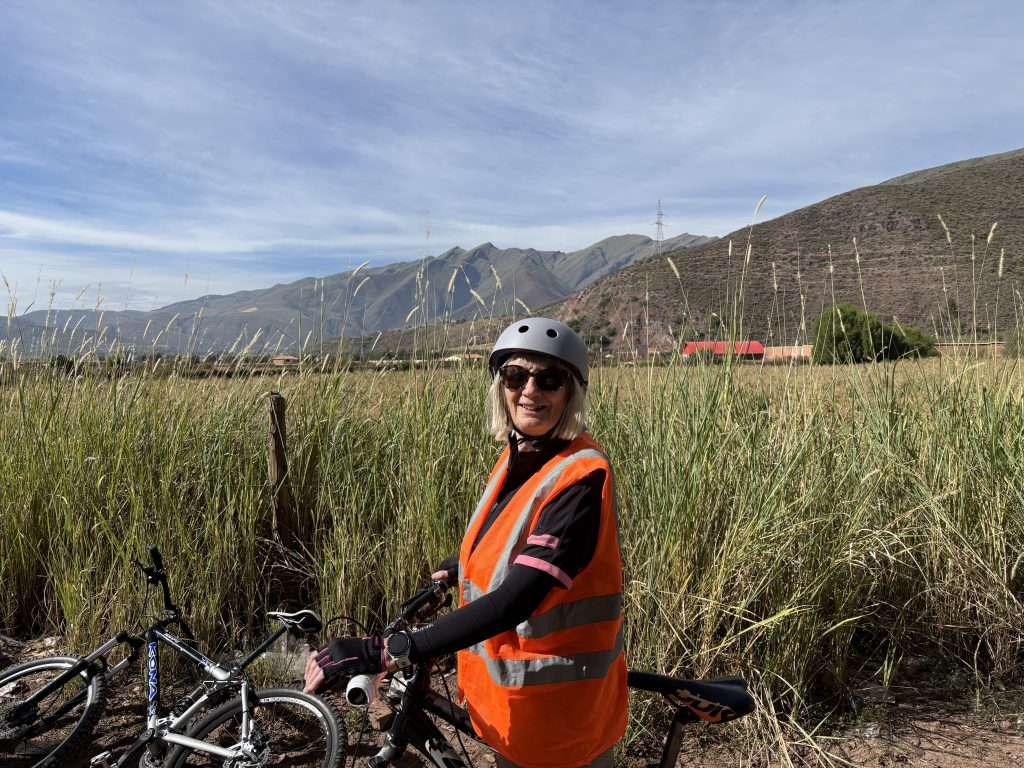
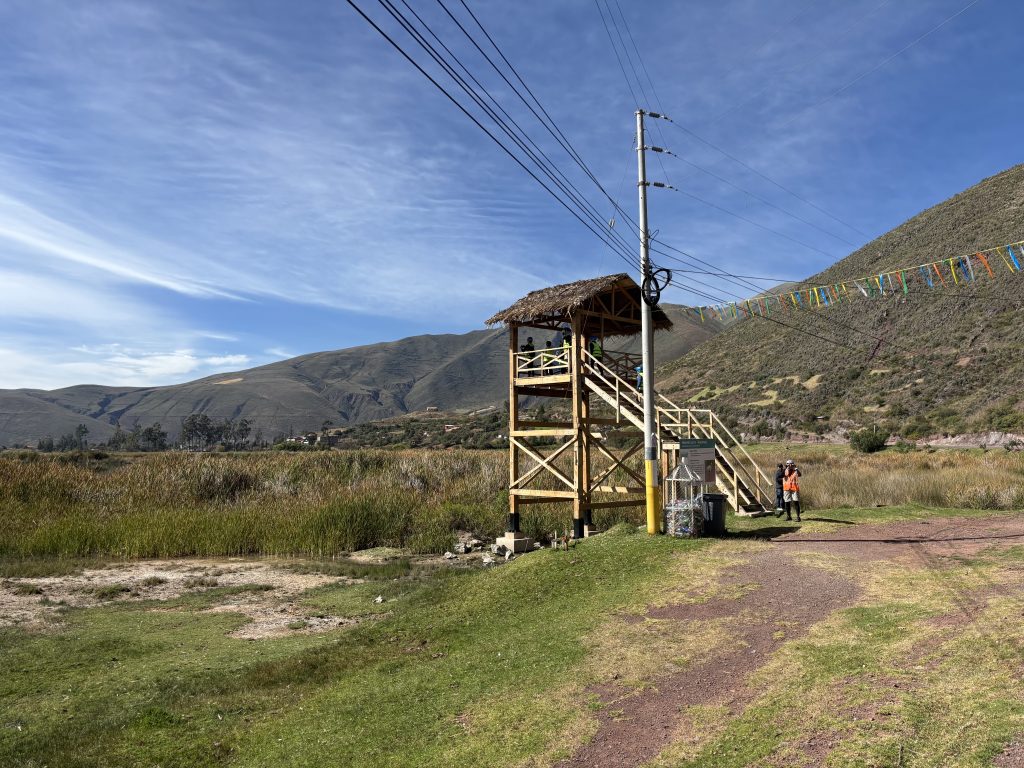
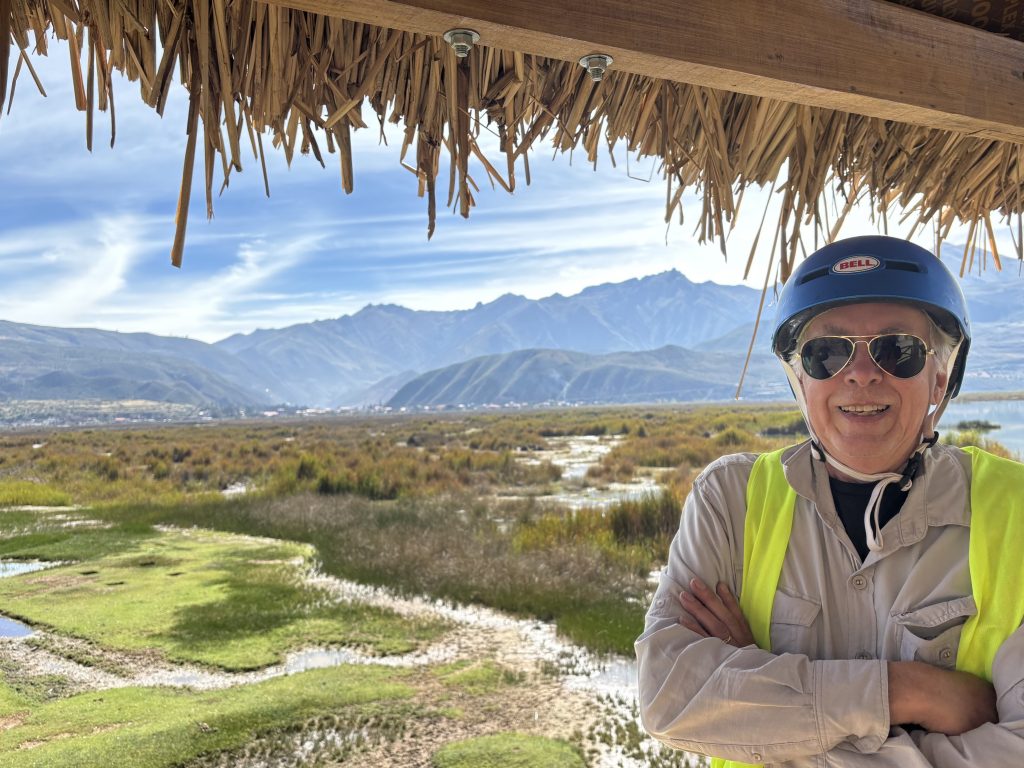
The route contained a number of obstacles, which slowed Lynne down, as she found carrying her bike over them rather difficult. We then cycled half way round a lagoon, once part of a large lake, and dismounted to climb a hide to look out over the lagoon.
Massed children in school uniform were practicing for a Mothers’ Day event filling the square in Lucre, so that Lynne continued to cycle past the rest of the group not realising that this was where the bike ride ended.
After re-joining our minibus, we climbed to the Andean high plateau, great open, verdant spaces, where camelids roamed, surrounded by mountains, reminiscent of Argentina.
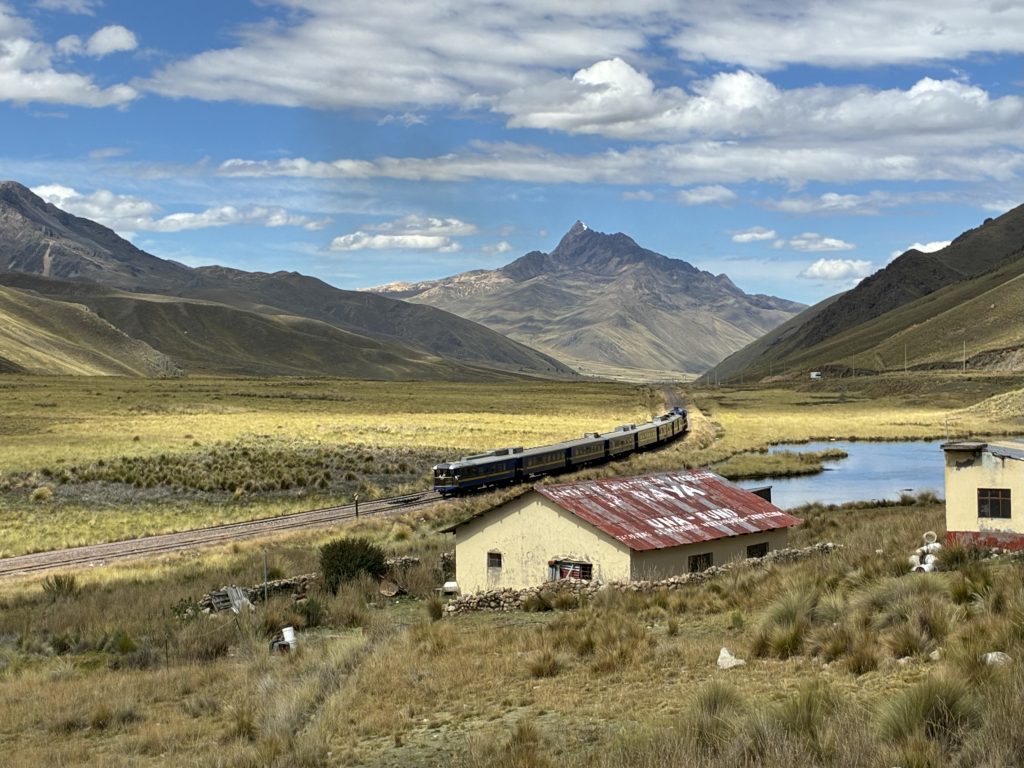
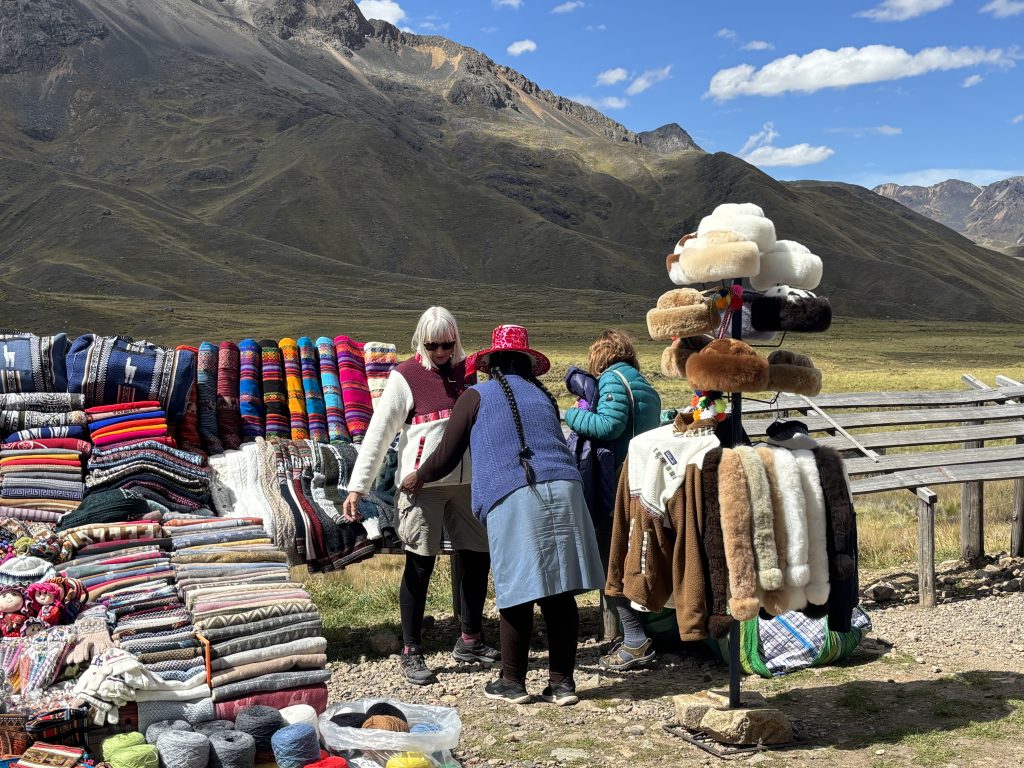
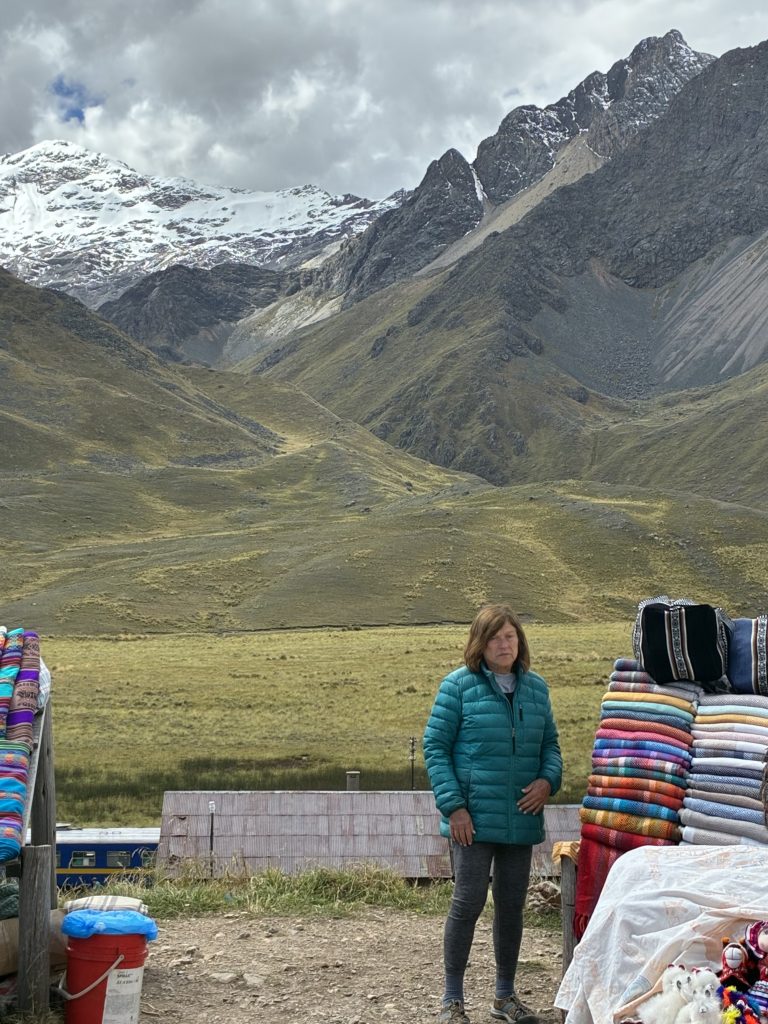
We stopped for a packed lunch at the La Raya pass at 4,335m altitude, with panoramic views of the mountains, enriched by the sight of a slow steam train running through the valley. As we climbed out of the minibus, ladies seemingly appeared from nowhere to man stalls by the roadside, catering to tourists. Vivien and Lynne were happy to oblige them.
We finally arrived in Puno, a town of 140,000 inhabitants perched on the hilly sides of Lake Titicaca , describing itself as the world’s highest navigable lake, at 3,800m.
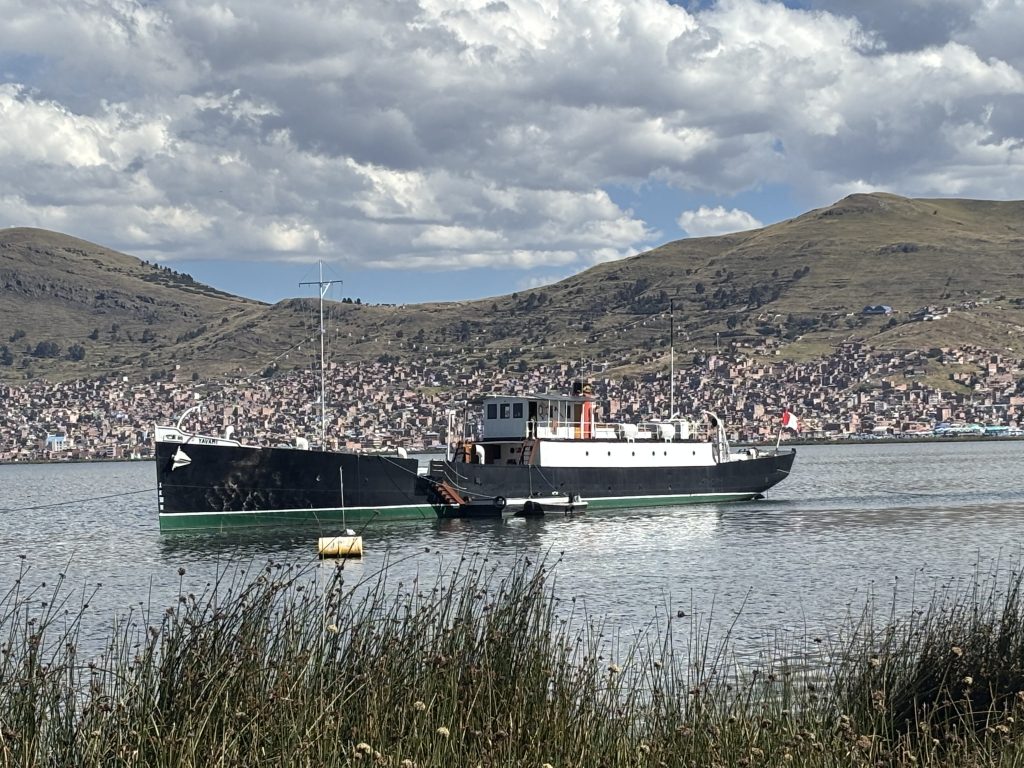
Our hotel was conveniently by the water side, where the incongruous sight of a steel ship met us. The ship Yavari was built in London, designed to be transported in small mule-sized pieces. It was launched in 1870, powered by llama dung!
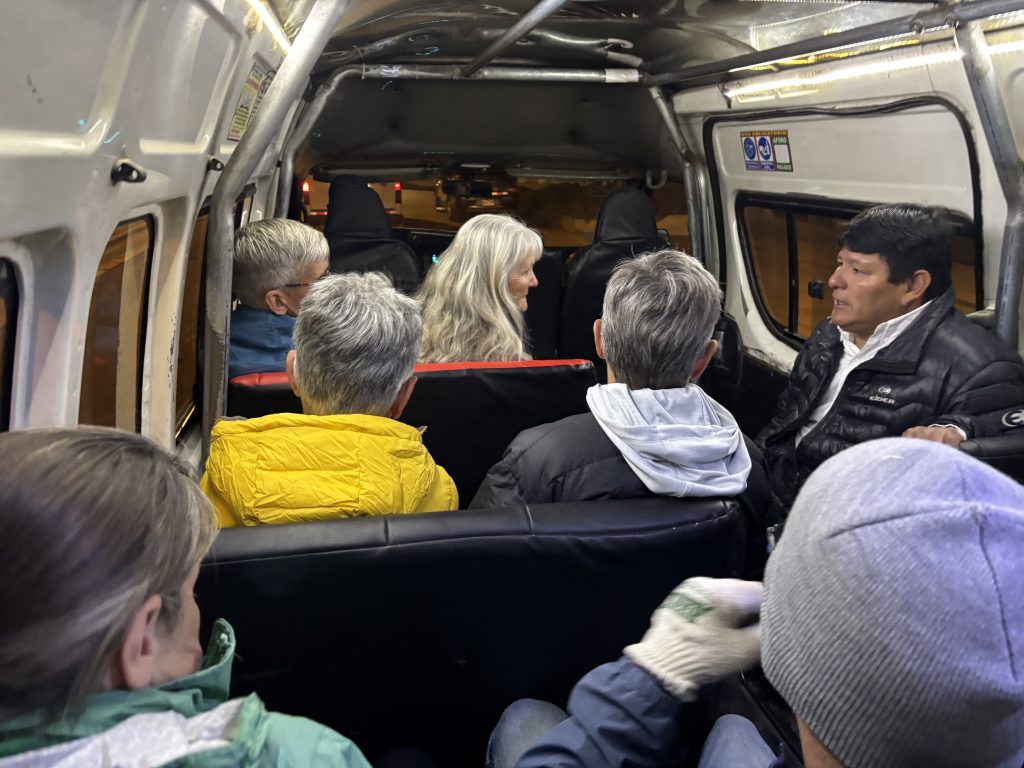
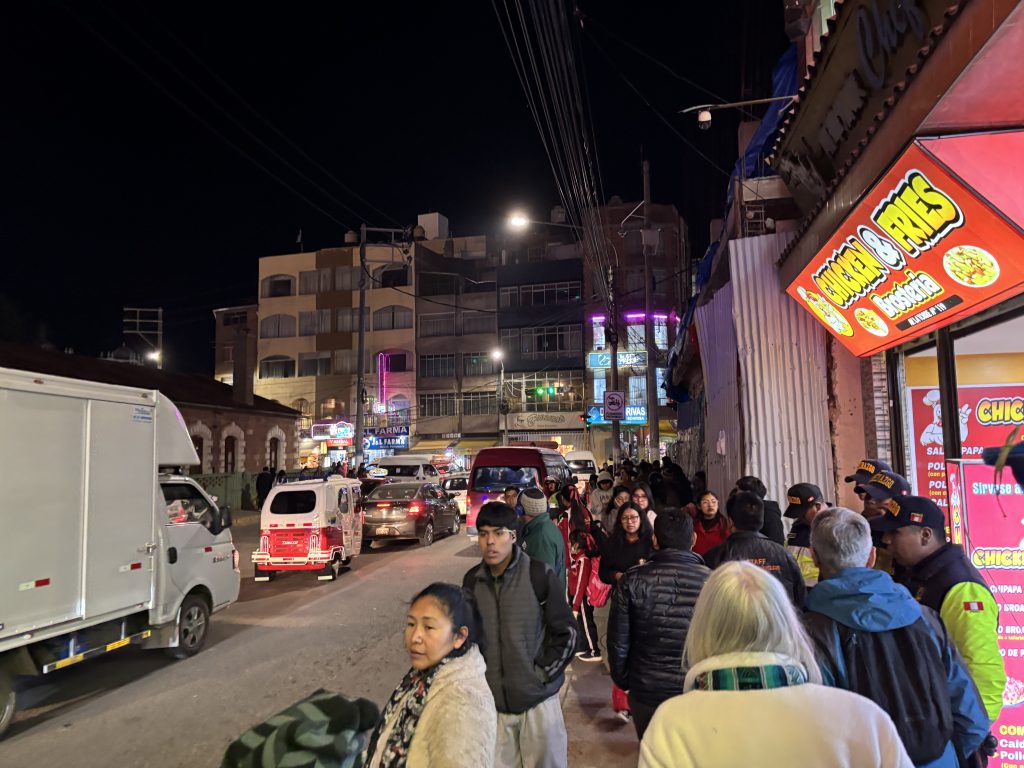
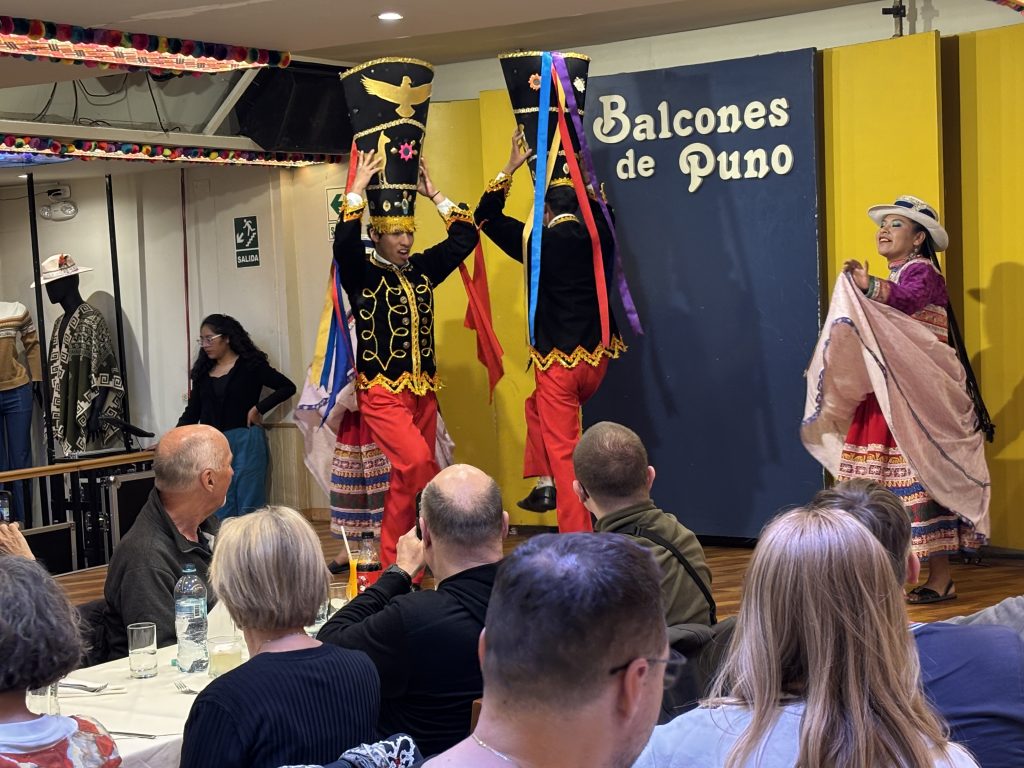
We caught a public minibus into the centre where we were entertained over dinner by Peruvian dancers, in costumes which became increasingly dramatic as the performance continued.

Public bus Street life Peruvian dancing
After dinner we delighted in shopping in a busy supermarket, for everyday staples to give to our local hosts the following day.
Day 2 Exploring Taquile and Amantani islands
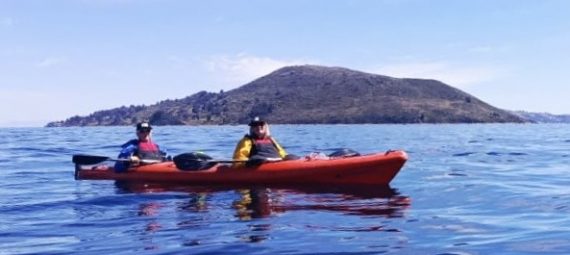
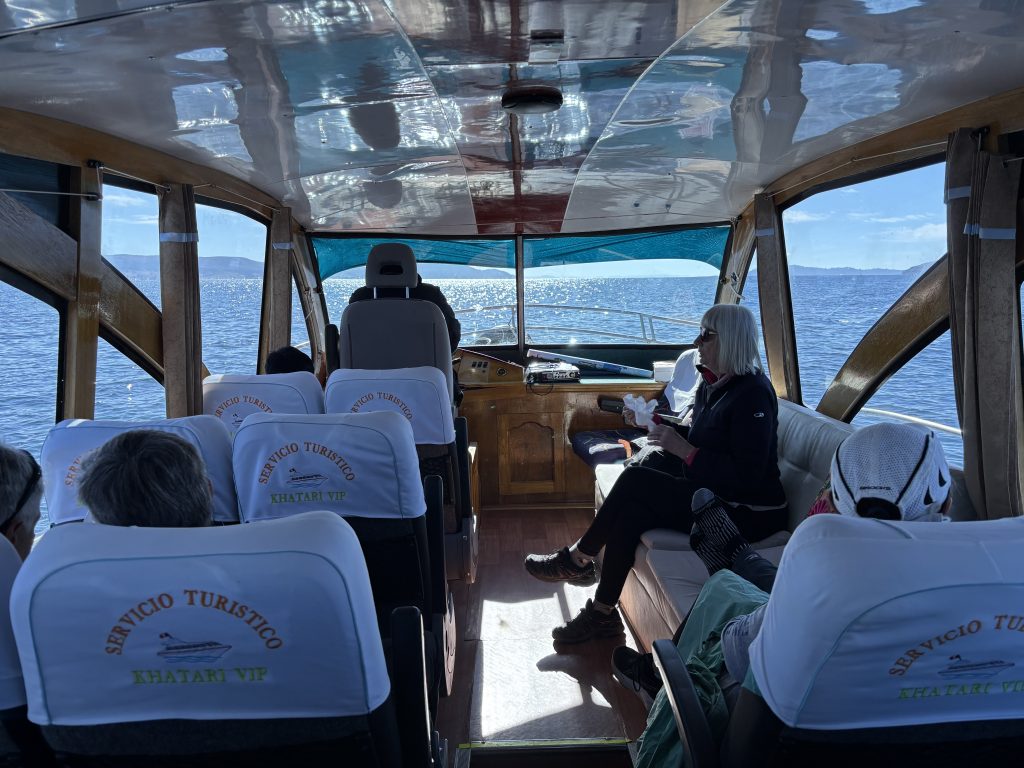
We set off at 7am on a motor boat from the hotel’s pier, which took us 90 minutes over the lake. This took us to a peninsula, where we picked up kayaks to make the 90-120 minute crossing to Taquile Island.
Taquile Island
Big, big lake Snowcapped mountains on horizon
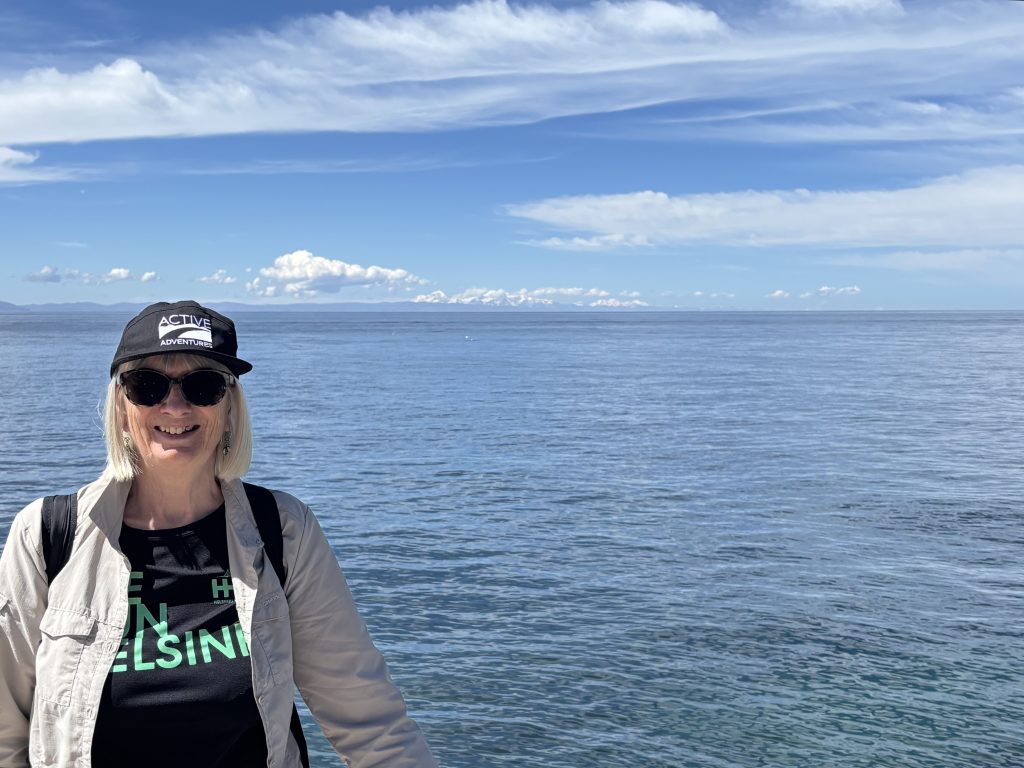
Very soon into our passage, Lynne became painfully aware that she wasn’t able to grasp the paddle with her left hand, meaning Peter had to do much more than his fair share of paddling. This was exacerbated by Lynne’s right paddle action, which was driving the double kayak off course. Correcting our course meant applying the rudder pedals, increasing drag, slowing us down.
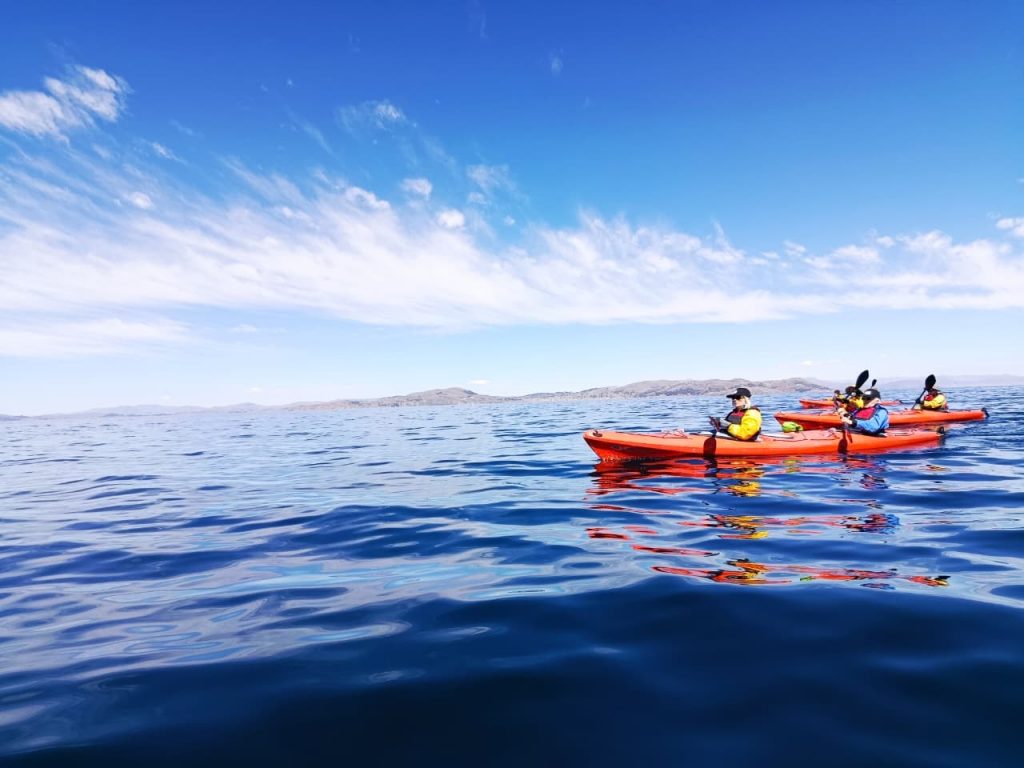
As a result, we hitched a tow from the following motorboat allowing us to catch the others. We really enjoyed the serenity of the lake, the nearly full moon high up the blue sky, and the sight of snow-capped peaks on the distant Bolivian mountains, across the lake.
On arriving at the small jetty on Taquile Island, we had to climb a very steep path and steps to reach our lunch spot at 3,950m altitude. Then we crossed over the top of the island, through a small village before descending down the other side on over 520 rough hewn and irregular steps to reach our motorboat.
Habitation
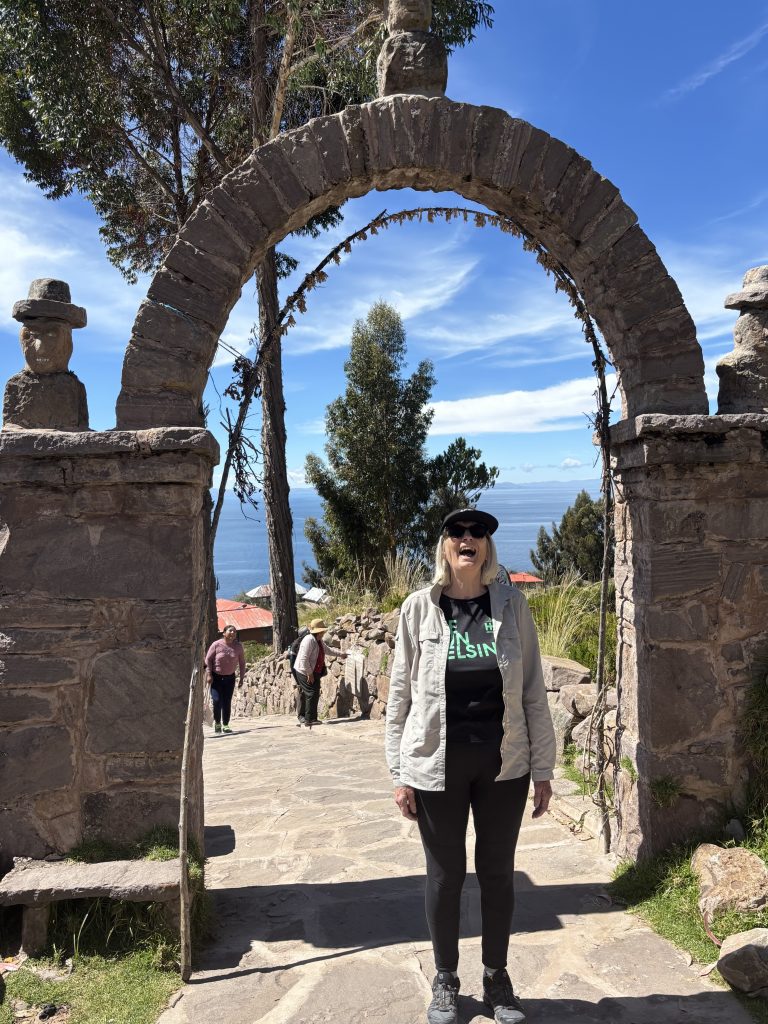
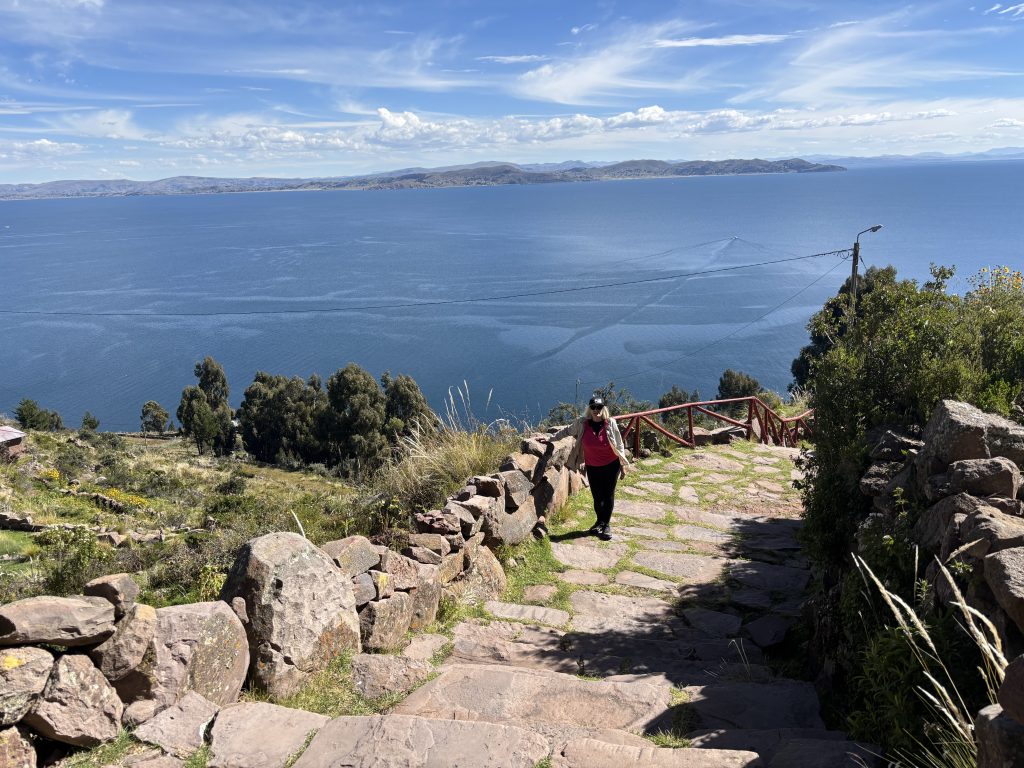
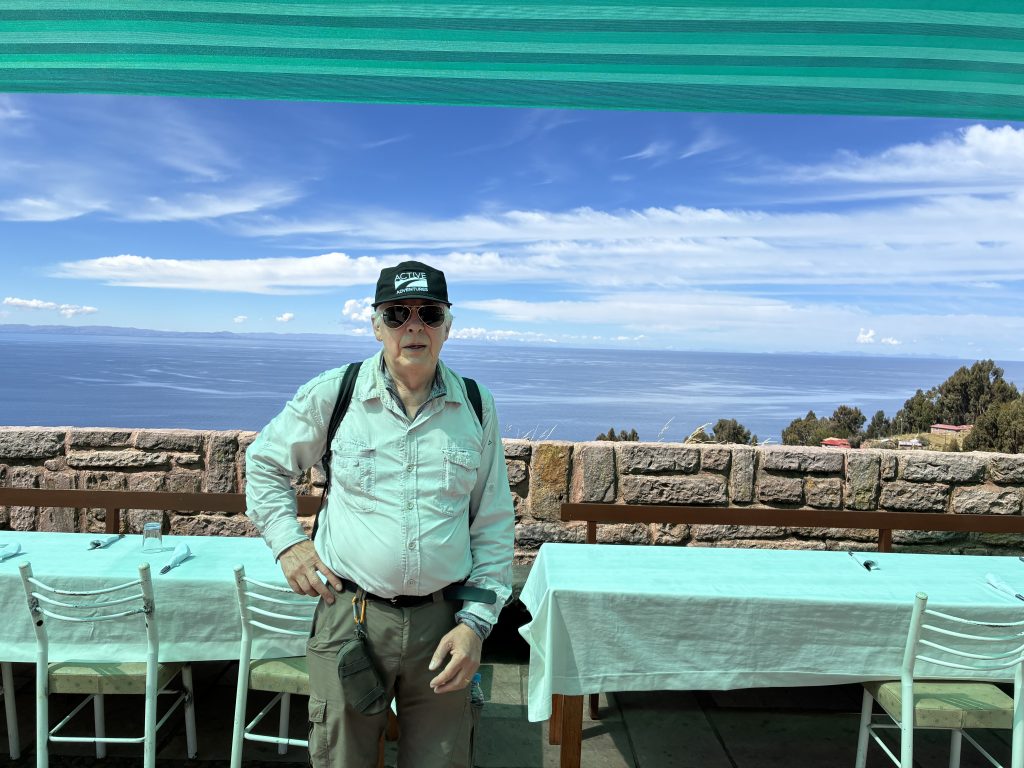
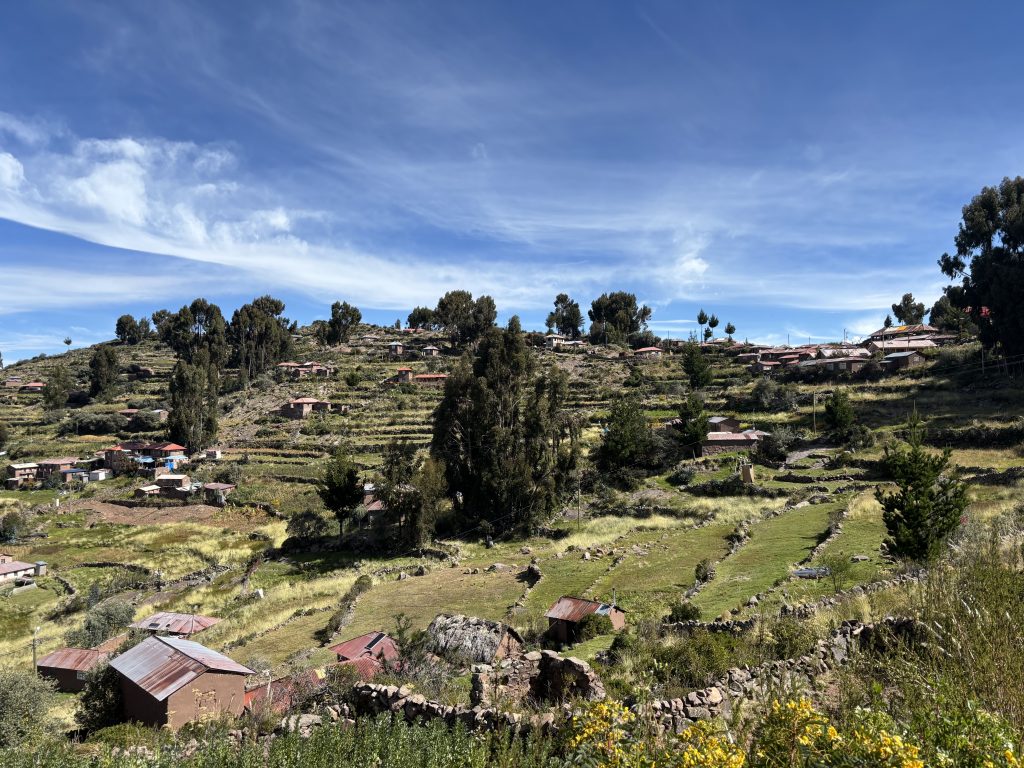
Taquile Island is home to people farming for the community, as they have done for generations. The flowers and crops, on the steep slopes were beautiful, but when the younger generation heads off to university in Puno, many do not return to continue the livelihood of their parents.
Amantani Island
It took another hour on our motorboat to reach Amantani island and our accommodation for the night. We were met by Aurora, our host for the home stay. Aurora led us up and up, to her house, which she shares with her husband and daughter (with one son studying at university in Puno).
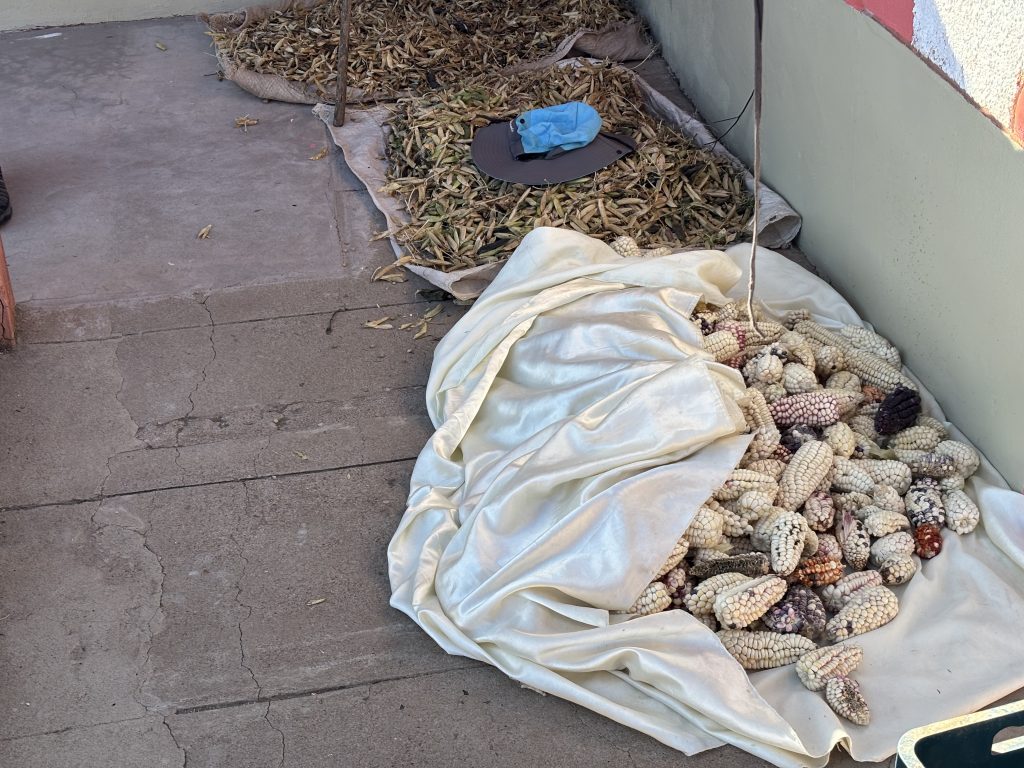
The house was primitive, although they were installing en-suite toilets and showers in our rooms, none that were finished nor available for use. We had to make our way outdoors, down steps, past leaves, beans and corn on the ground, to dry in the sun.
There was an optional hike up the hill to view the sunset. Vivien and Lynne gallantly set off, but Lynne was defeated by the steep climb, ruing her inability to maintain her fitness following her accident.
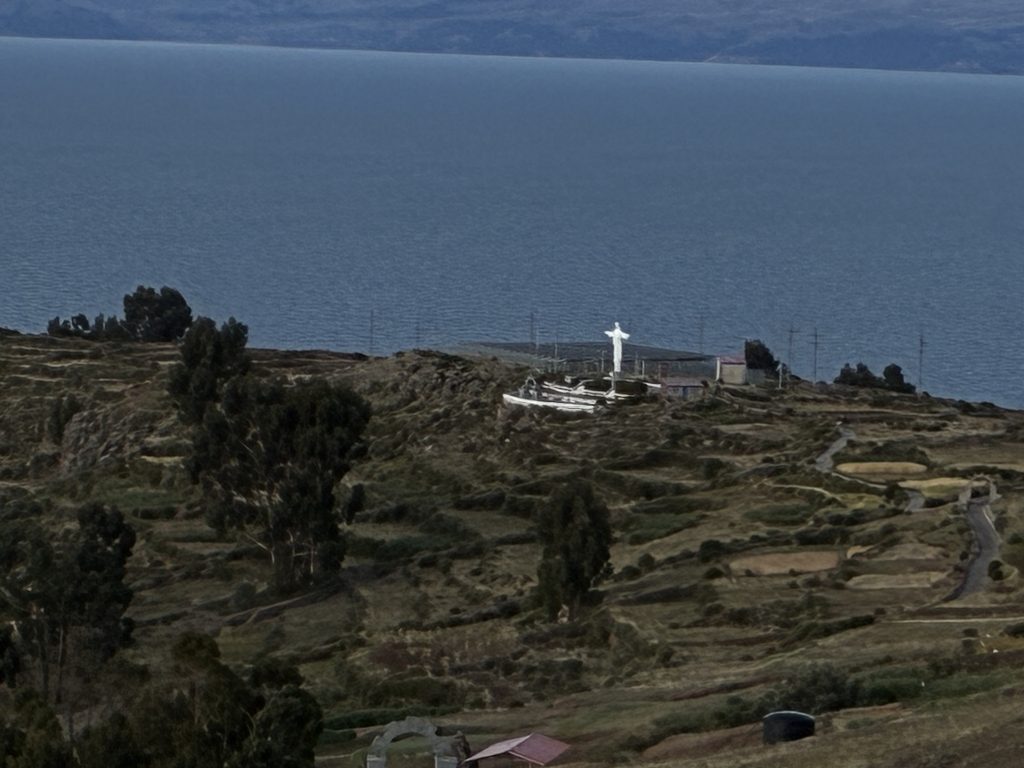
They sat high up, enjoying the vistas of the mountains, with the statue of Christ, with arms outstretched, far below them, watching ladies cart their harvests on their backs and men doing likewise, but on motorbikes. Wild flowering lupins lighted up the path.
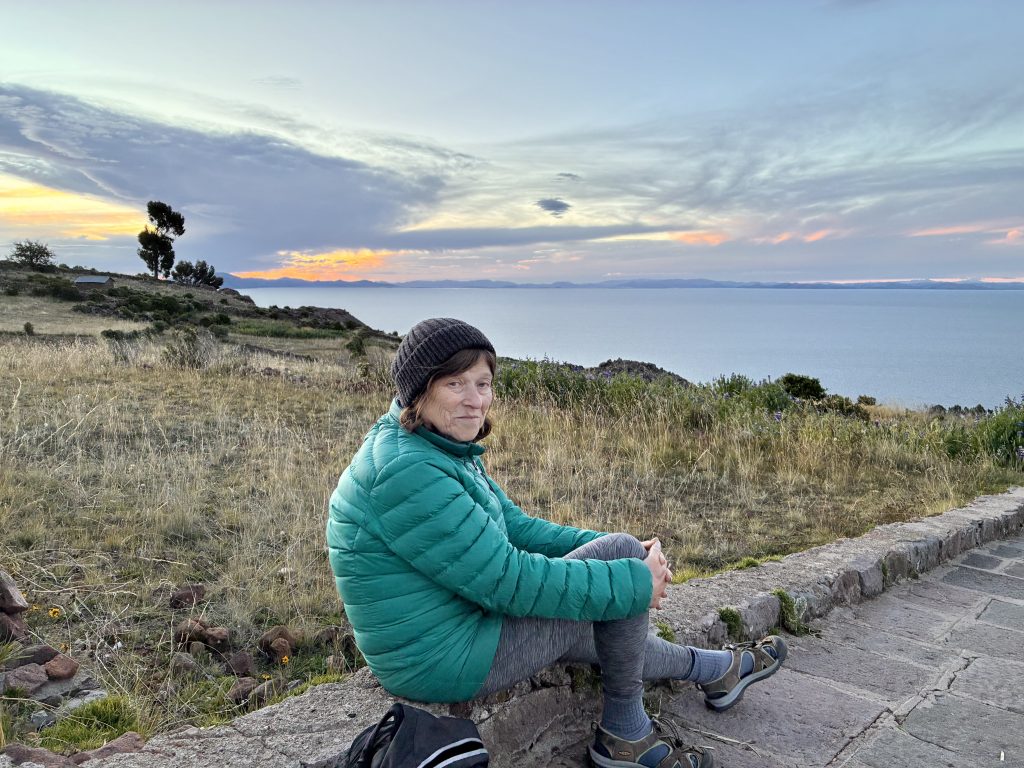
At 5.30 pm as it became dark and much colder, Lynne and Vivien decided to walk slowly down the mountain, expecting the rest of the group to catch up: they didn’t. Undaunted, they found their way back to Aurora’s house, past the football pitch, the barbed wire, the pigs and AstroTurf, feeling rather pleased with themselves at finding the route. Sadly our guide didn’t quite feel the same way: with no mobile reception, he had to visit the house himself to make sure that they had found their way back!
Peter meanwhile, back at the home stay, working on this blog, was running out of additional clothes to stop himself from getting hypothermia.
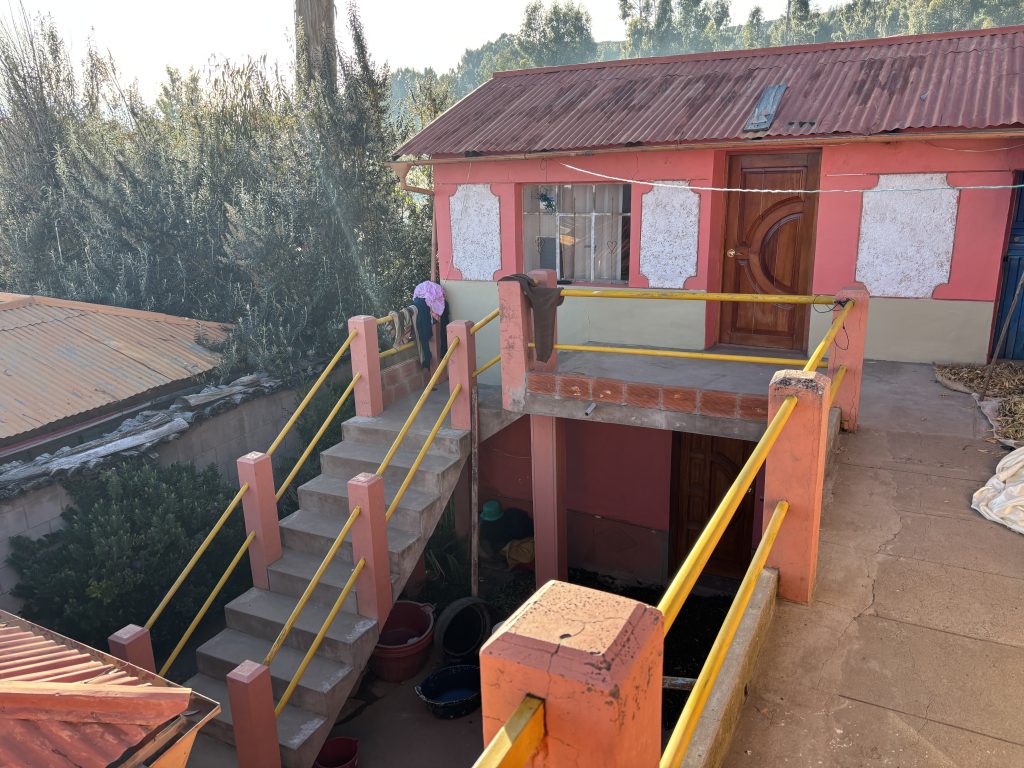
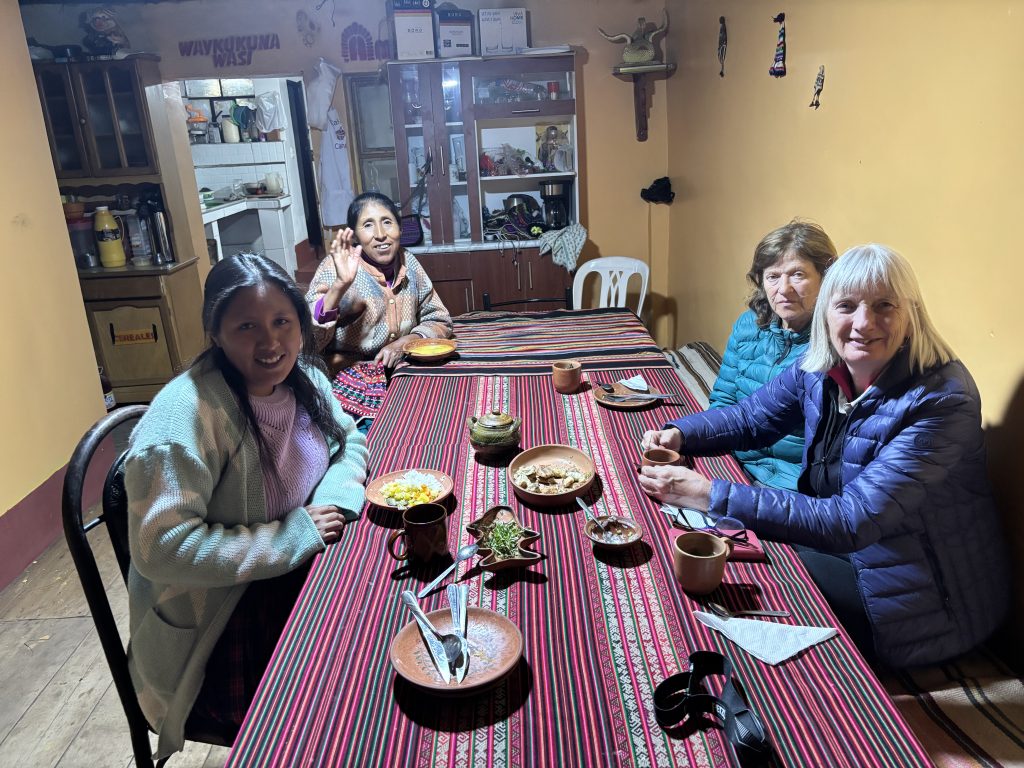
Amantani island has been inhabited for 3,000 years. It was like time travelling at least 200 years, with our vegetable broth and rice and vegetables cooked on a wood-burning stove. The homemade oregano bread was delicious.
Fortunately Aurora’s English speaking daughter joined us for supper as she was able to translate for her mother who spoke minimal Spanish.
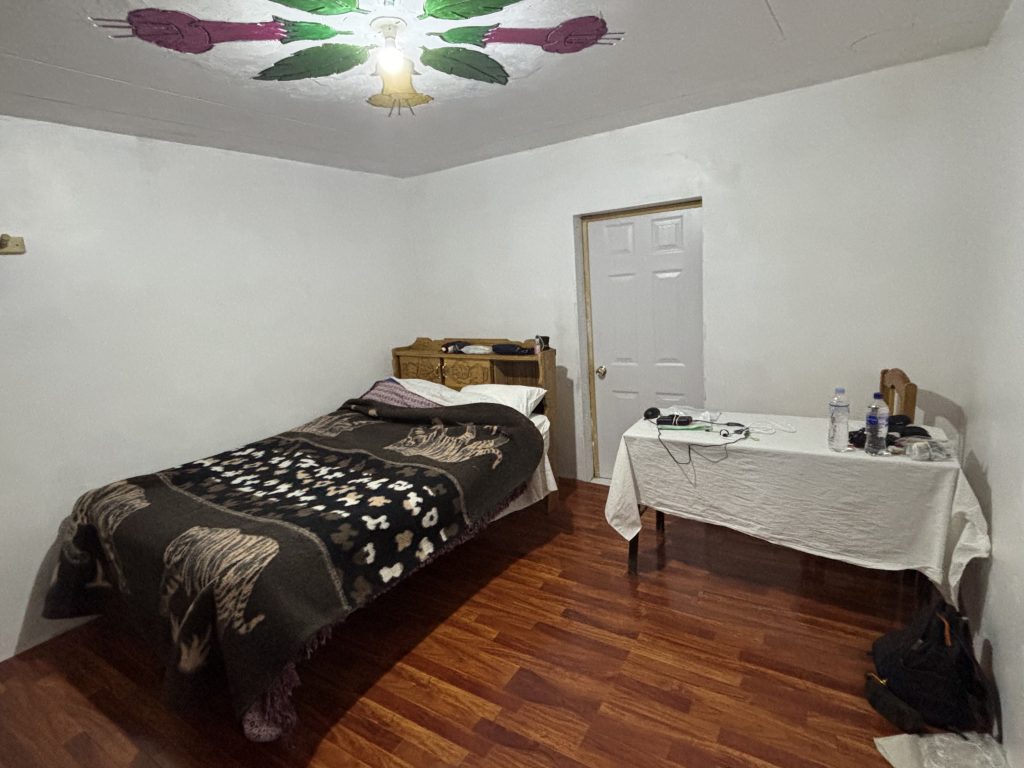
We retired to bed at 8pm, requiring multiple really heavy blankets to keep warm. Whilst the house boasted electric lights, our room, one very welcome lightbulb, the only heating was the stove in the kitchen which was nowhere near the bedrooms.
Day 3
We were up early, refreshed and ready for our last day of the tour. We were invited by Aurora into the kitchen to help stretch the dough and make bread cooked in oil over a little gas stove.
Fire cooking
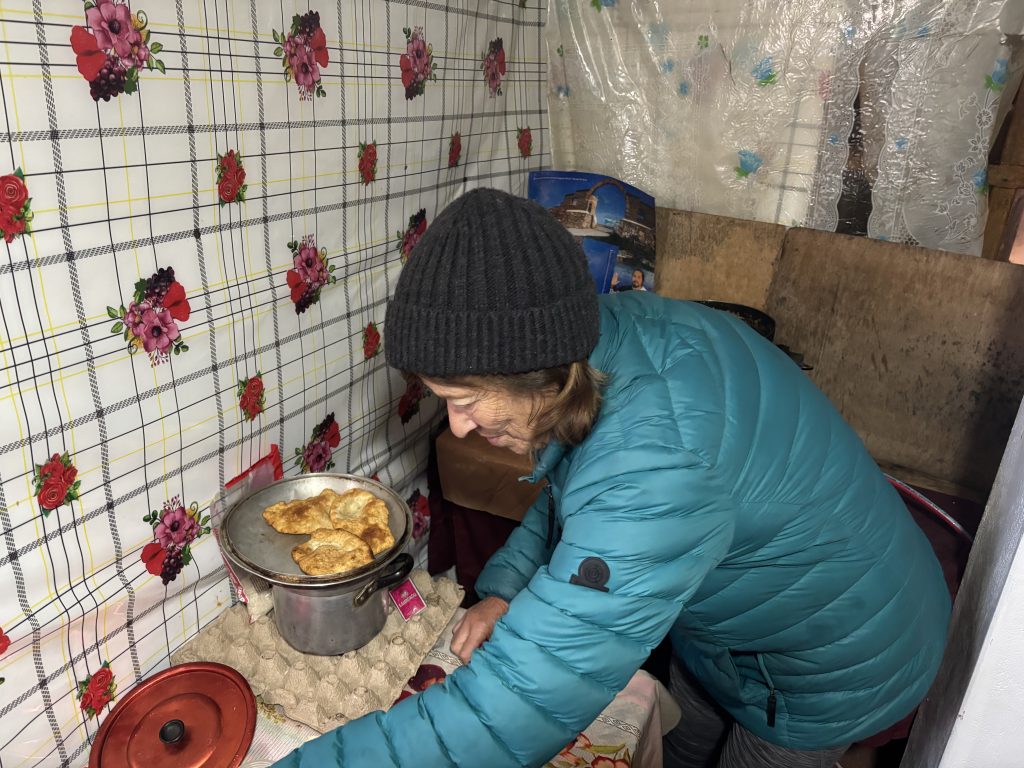
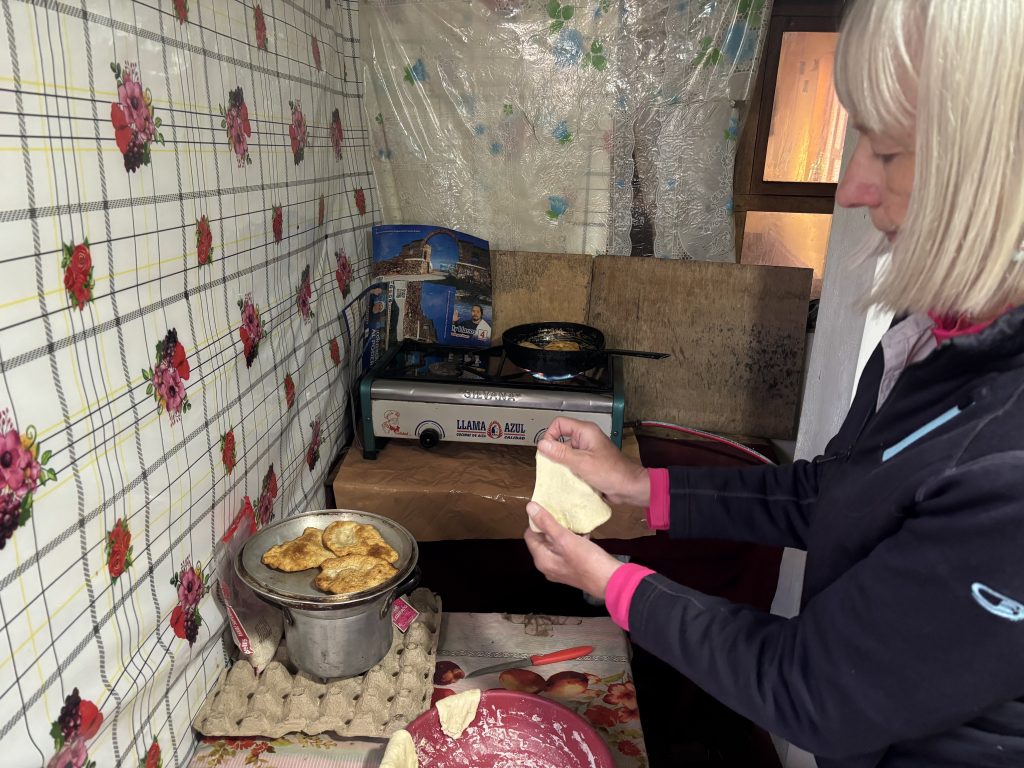
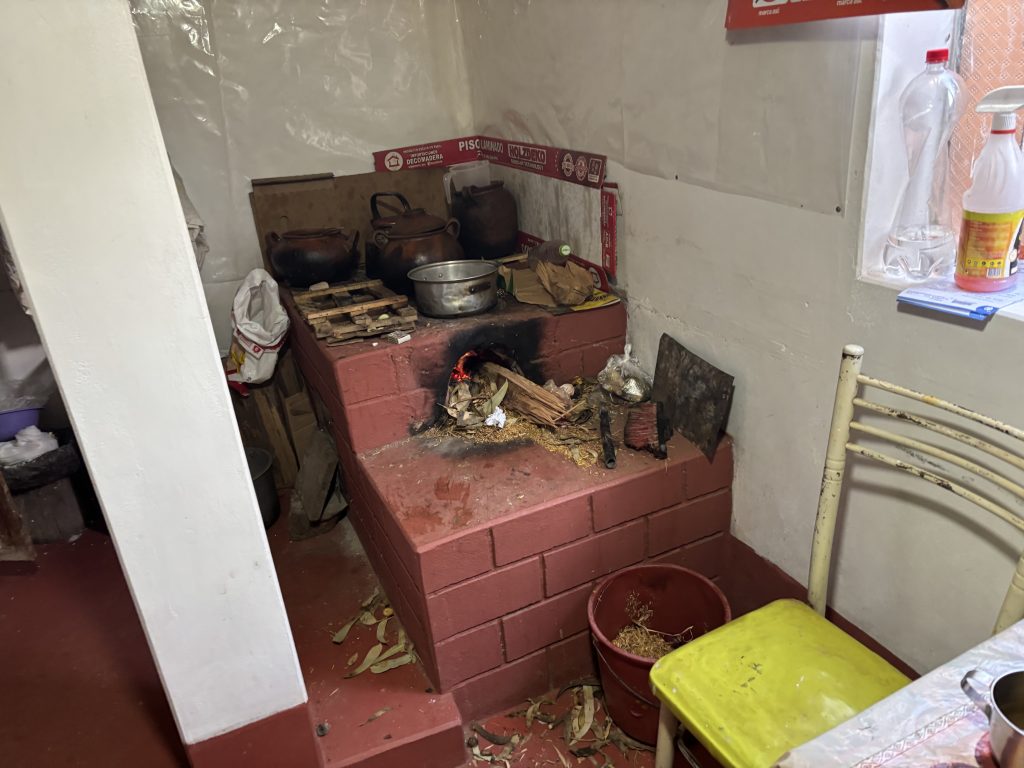
Breakfast was the results of our endeavours with jam and a fresh hard-boiled egg. We had to ask for plates.
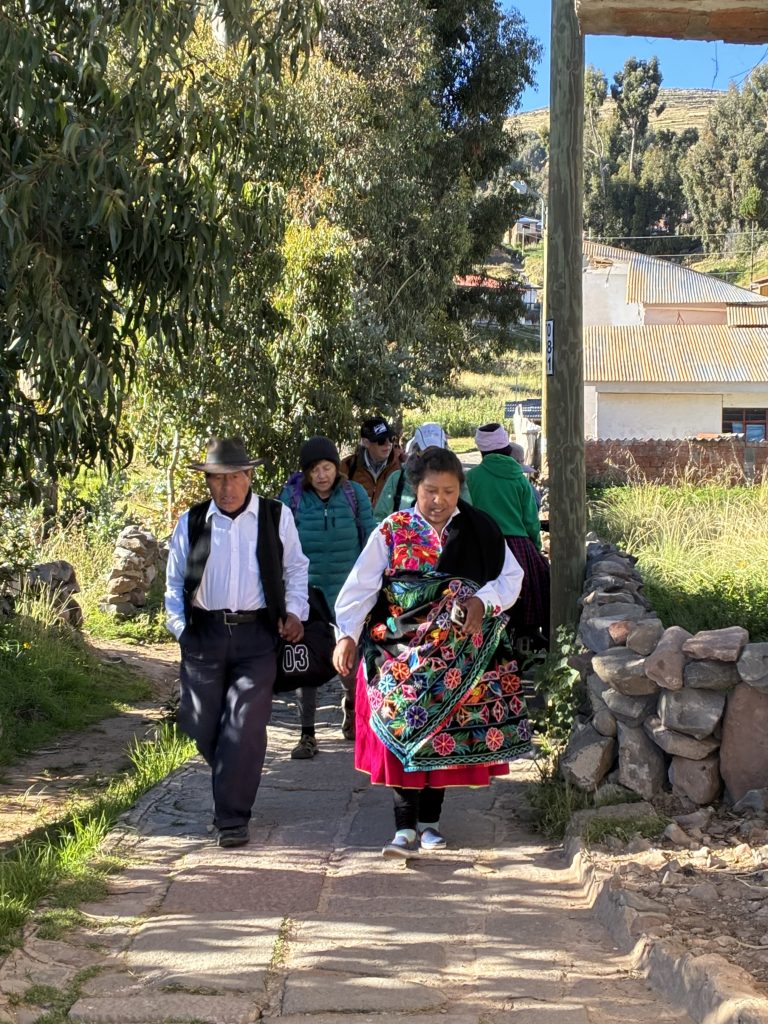
We saw Aurora’s daughter briefly, who was now sporting a pair of jeans (as opposed to traditional garb) as she left to make the 90 minute journey by boat and bus, to the school where she teaches young children in Puno.
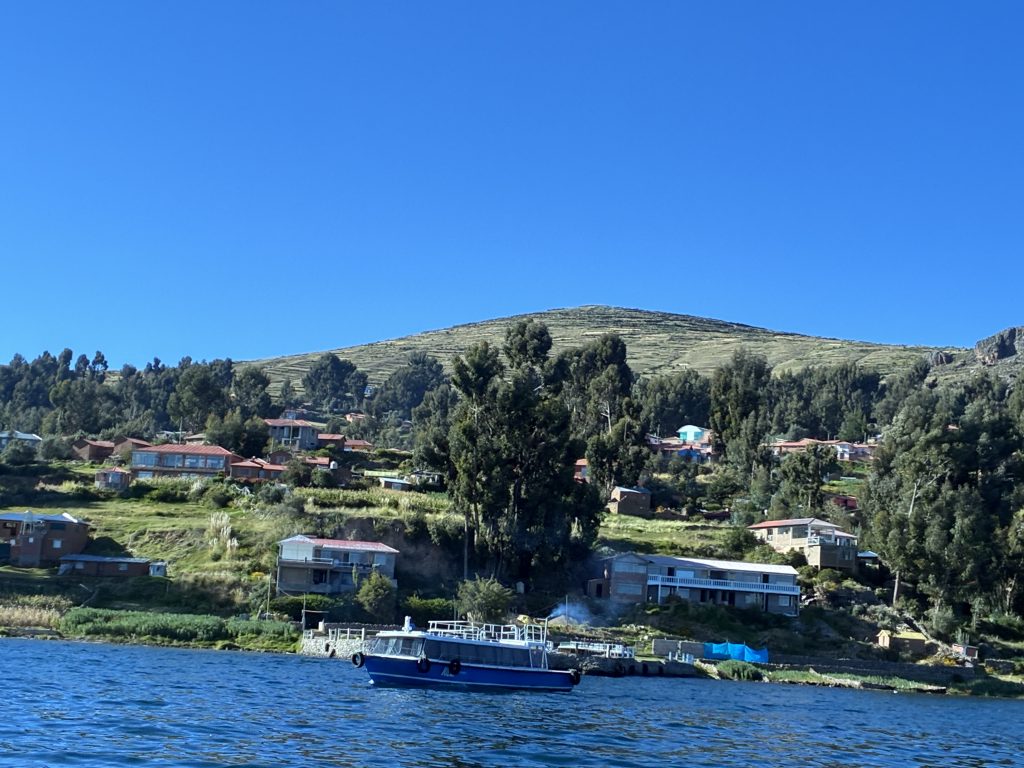
Then we were led by the husband down to the waterfront to pickup our motor boat. We looked back at Amantani Island, thoughtful that it would be completely changed within 20 years. This is surely the last generation to live in the ancient tradition. Houses are being renovated, presumably some sold to outsiders and we could envision that the island would attract visitors, not by a rota system of offering a home stay, but using Airbnb and individual enterprise.
Back to our boat Amantani Island
Back at kayaking base camp, we rigged up a face flannel held in place by a bandage from the medicine box, to give Lynne’s injured left hand a better grip on the paddle. This was a great success, as we kayaked along the coastline and past the construction of a new harbour and pier. A highlight for us all was gliding through large areas of reeds, and spotting some grebes, unique to Lake Titicaca.
Then, after a 1 1/2 hour motorboat journey, we visited the floating island of Suma Qaniwa. These islands of Uros, came about, after the locals lived hidden among the reeds, to resist and hide from the Incas who wanted to use them as slaves in the mines.
Family home Floating Island
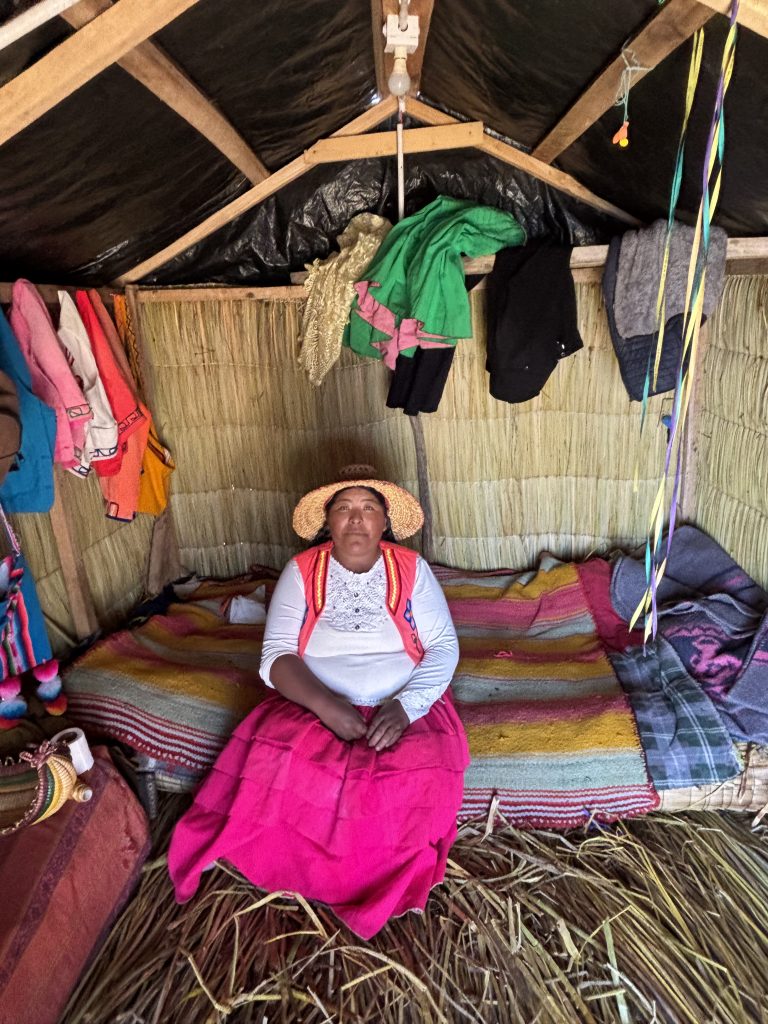
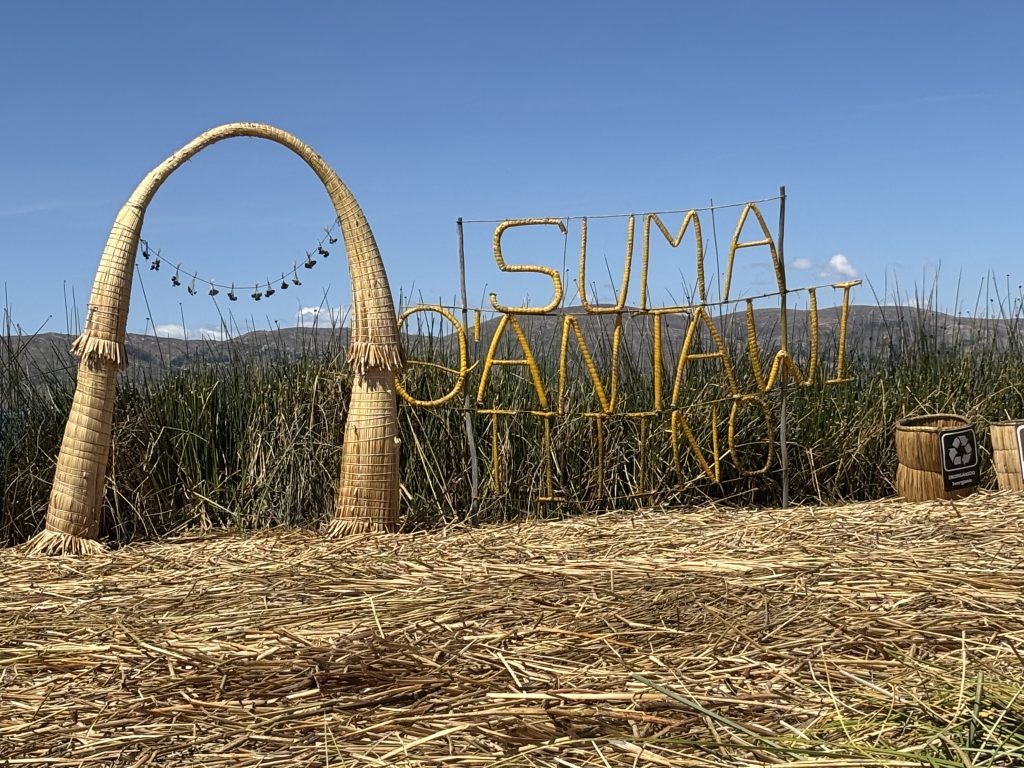
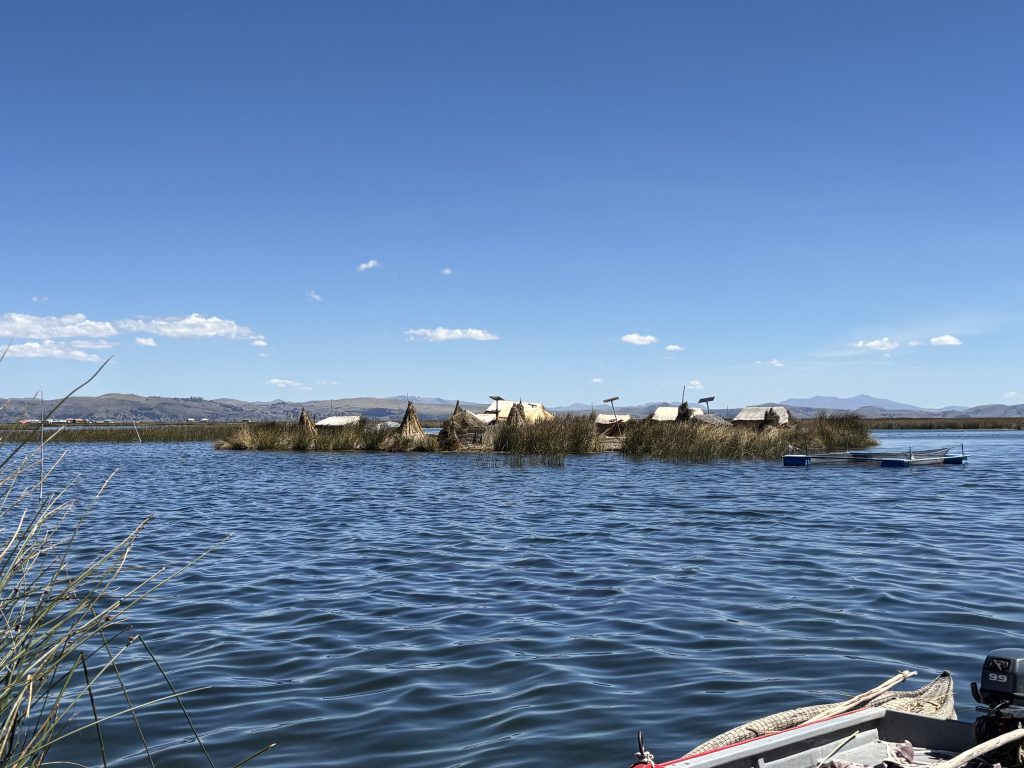
We were shown how the islands are built, by the head of the tiny reed island, which housed four families with a total of only twenty two people, including children. The island reeds need to be replenished frequently involving raising the tiny, primitive houses made of reed. Nowadays, with the proceeds from visiting tourists, some of the islanders have solar panels to provide electricity for basic lights in the reed huts.
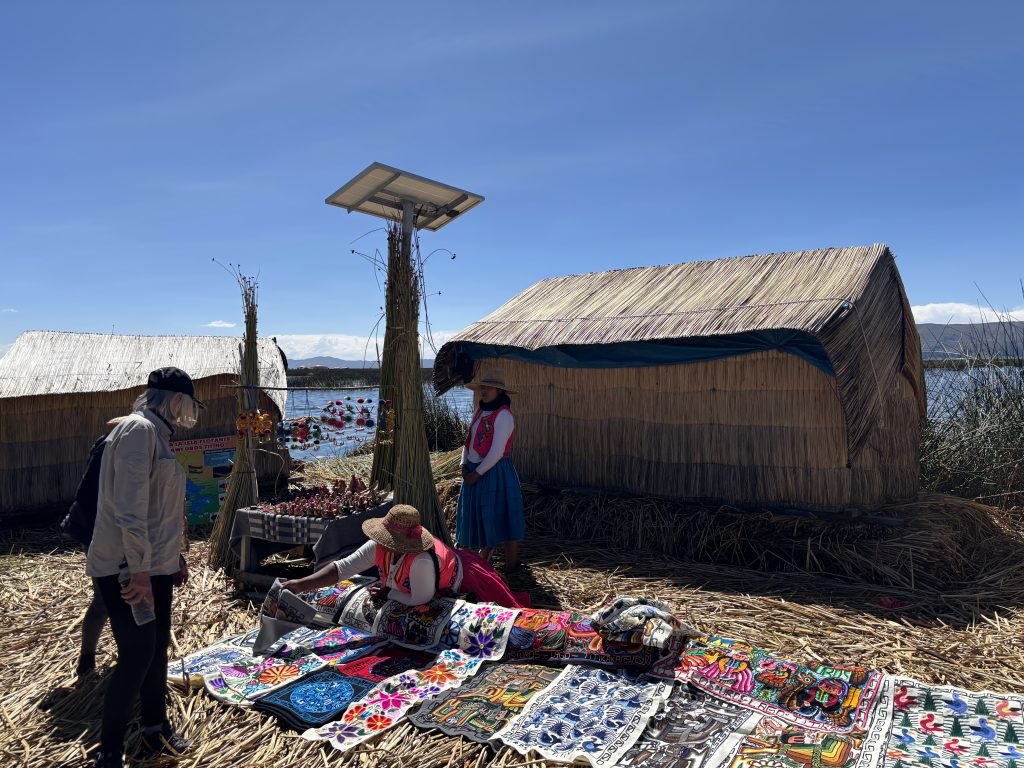
The inhabitants walk around barefoot to avoid sinking through the reeds. The women embroider textiles, crochet and knit to earn money from the tourists. There were ducks and ducklings mingling with us. They speak Aymara a pre-Inca language. There is an elementary school on one of the islands.
We were taken for a short ride on one of their reed boats to witness how they use the reeds for all manner of uses. Absolutely fascinating but unlikely to survive as a way of life except as a tourist attraction.
Another 90 minutes to arrive back at our hotel, where we revelled in a hot shower, sorting out our luggage for a very early departure to Lima the following day. But first the public bus into Puno for our final dinner together, where it was Lynne this time who enjoyed her first Pisco Sour of the holiday.
Some stunning scenery